
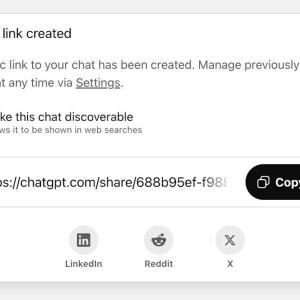
OpenAI recently removed a feature that allowed shared ChatGPT conversations to show up in Google search results. This decision came after many users expressed concerns about privacy. OpenAI’s chief information security officer, Dane Stuckey, confirmed that the company is taking steps to prevent these chats from appearing online.
The change follows a report from Fast Company that highlighted thousands of indexed ChatGPT conversations on Google. While these conversations didn’t contain explicit names, they sometimes revealed specific details that could lead back to the users. The issue wasn’t a hack; instead, it was linked to a feature users could activate when creating a shareable link. There was a checkbox labeled “Make this chat discoverable,” which many users may not have fully understood.
Some people might wonder why anyone would want to share a public link to a private chat. In many cases, users intended to share their chats in messaging apps or wished to revisit important discussions later. After the backlash, OpenAI decided to eliminate this option entirely. Stuckey acknowledged that, although the labeling was “sufficiently clear,” the possible risks outweighed the benefits.
This decision reflects a growing concern around data privacy, especially in the tech industry. According to a recent survey by the Pew Research Center, over 80% of Americans feel concerned about their online privacy. As technology evolves, maintaining user trust is crucial.
User reactions on social media showed mixed feelings. Some welcomed the change, appreciating OpenAI’s commitment to privacy. Others expressed frustration over not being more informed about the feature beforehand.
In summary, OpenAI’s recent move illustrates the importance of clear communication about user privacy. It serves as a reminder that even small features can have large implications for user trust and safety in the digital age.
For more on data privacy, you can check out this Pew Research report for insights on public concerns.
Source link
Fast Company, OpenAI, Dane Stuckey, chief information security officer, conversations, public link
