
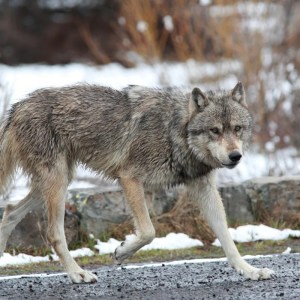
A long-term study on reintroducing wolves to Yellowstone National Park has revealed surprising truths about ecosystem balance. Researchers from Colorado State University began their work in 2001, examining whether bringing back wolves, grizzly bears, and cougars would restore the park’s food web.
By the 1920s, the U.S. government had eliminated wolves to control their populations. This decision led to a dramatic rise in elk numbers, which overgrazed willow and aspen trees. The loss of these trees, in turn, affected beavers, as they rely on willows for food and shelter. Without beavers, the ecosystems suffered from the loss of natural flooding that supports plant life.
In 1995, wolves were reintroduced to the park, sparking hope for recovery. However, the outcomes were complex. While cougars and grizzly bears rebounded, bison took over the grazing areas left by the elk, putting additional pressure on willow and aspen trees. The ecosystem had changed more than expected, showing that restoring balance isn’t always straightforward.
Professor Tom Hobbs, who led the study, emphasized that disrupting an ecosystem creates lasting problems. He noted, “When you disturb ecosystems, it can lead to changes that are not quickly fixed.” This statement rings true not only in Yellowstone but around the world.
Globally, biodiversity loss is a pressing issue. According to the United Nations Foundation, declining species can lead to mass extinctions and food supply challenges, affecting human health directly. Just like removing a block from a Jenga tower destabilizes the entire structure, every lost species can shake the foundation of our ecosystems.
Hobbs pointed out that ecosystems can recover, but it might take decades. His advice? “Don’t lose them in the first place. Keeping the food web intact is crucial, as there isn’t a quick fix for losing top predators.”
Despite the challenges, there are positive developments. Conservation efforts have helped 29 species in Australia bounce back from the brink of extinction. Scientists are also exploring biobanking, preserving cells from endangered species for potential breeding programs or cloning.
Individuals can play a role in protecting our planet’s ecosystems. Actions like supporting local climate initiatives, choosing eco-friendly products, and reducing energy use can collectively make a difference.
In summary, the Yellowstone study teaches us that restoring balance is a long journey. Our choices today can have lasting effects on both wildlife and human health. Protecting our ecosystems means ensuring a stable future for all living beings.
Source link
apex predators, food web, reintroduction of wolves, Colorado State University, food sources, Yellowstone Forever, Tom Hobbs
