
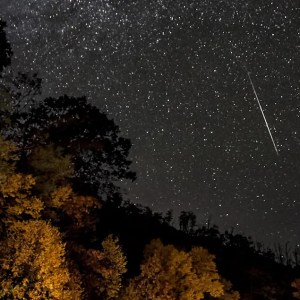
A stunning show in the night sky is coming soon. The Orionid meteor shower will peak overnight on Wednesday, with a chance to see some bright fireballs. According to NASA, these meteors are some of the most brilliant you’ll see all year.
The Orionids come from Halley’s Comet, which is unique because it’s the only short-period comet visible to the naked eye from Earth. It last passed by us in 1986 and is expected to return in 2061.
Active from early October to early November, the Orionid shower can produce meteors flying at speeds of up to 148,000 miles per hour. Most nights, you’ll see around 15 to 20 meteors an hour under perfect dark skies, according to the American Meteor Society.
### What are the Orionids?
The Orionid meteor shower gets its name from the constellation Orion, as it appears to originate from that area. Each October, Earth moves through the debris trail left by Halley’s Comet. Interestingly, the same comet produces another meteor shower, the Eta Aquariids, seen in spring. The Orionids are considered of medium strength, making them a reliable yearly spectacle.
### When to Watch
You can catch the best views in both the Northern and Southern Hemispheres in the early morning hours, especially between 1 a.m. and dawn. Because these meteors move so quickly, they create trails of gas that linger in the sky for a few seconds. While the Orionids usually appear as white streaks, they aren’t known for vibrant colors, unlike some other meteor showers.
### Where to Watch
This year, sky conditions should be ideal due to the new moon on October 21, which means darker skies during the early morning hours. To maximize your chances, find a spot far away from city lights, where the sky is clear. Clouds can be a bother, but good luck might keep them away.
### Unique Insights
In recent years, the rise of social media has sparked online excitement about meteor showers. People share their experiences and photos instantly, creating a buzz that encourages others to look up. Platforms like Instagram are filled with breathtaking images, inspiring even more star-gazers.
Experts note that events like the Orionid meteor shower have a dual benefit. Not only do they captivate stargazers, but they also remind us of our place in the universe, encouraging scientific curiosity and exploration.
So, this October, bundle up, grab some snacks, and enjoy the celestial show. It’s a chance to connect with nature and perhaps let your imagination wander among the stars.
Source link
Orionid meteor shower, American Meteor Society, Halley’s comet, Getty Images, fireballs
