
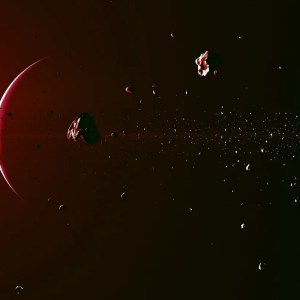
Before Earth, there was “proto-Earth,” a rocky mass formed about 4.5 billion years ago. This young planet looked nothing like our home today. It was a wild landscape of bubbling lava and rocky terrain, full of potential.
However, this fiery stage was short-lived. When proto-Earth was around 100 million years old, it collided with a Mars-sized object in a cataclysmic event. This impact not only formed our Moon but also changed proto-Earth forever, erasing its early materials and composition.
Fast forward to today—a new study from MIT reveals that traces of proto-Earth might not be entirely lost after all. Researchers discovered a unique chemical “anomaly” in ancient rocks, providing a rare glimpse into our planet’s early days. Nicole Nie, an assistant professor at MIT and co-lead of the study, stated, “This is maybe the first direct evidence that we’ve preserved proto-Earth materials.” She expressed excitement about finding a connection to Earth before the giant impact.
The breakthrough came, surprisingly, from meteorites, which act as time capsules from different points in the solar system’s 4.6 billion-year history. By studying their chemical makeup, the research team created a timeline of the solar system’s evolution.
When they compared meteorites to Earth rocks, they found a “potassium isotopic anomaly.” This means that the potassium isotopes found in meteorites were not the same as those on Earth. Currently, potassium-39 and potassium-41 dominate Earth’s isotopes, while potassium-40 is minimal. In the meteorites, a different balance suggested that these space rocks predate today’s Earth structure.
Nie noted, “Different meteorites have different potassium isotopic signatures, meaning potassium can be used as a tracer of Earth’s building blocks.”
By chasing this clue, the researchers studied some of the oldest rocks on Earth and found even fewer traces of potassium-40. This implies that potassium-40 was scarce on proto-Earth, gradually increasing over billions of years. Extensive simulations further supported this idea, showing how potassium-40 accumulated over time.
The quest to understand our planet’s original makeup is ongoing. Nie remarked that while scientists have combined meteorite compositions to learn about Earth’s history, there’s still much we don’t know.
This research not only deepens our knowledge of planetary formation but also highlights the gaps we still have in our understanding of Earth’s origins. Each discovery brings us a bit closer to piecing together our planet’s story.
For more insights, check out this MIT study.
Source link
proto Earth, chemical composition, Nicole Nie, ancient Earth, researchers, present-day Earth
