
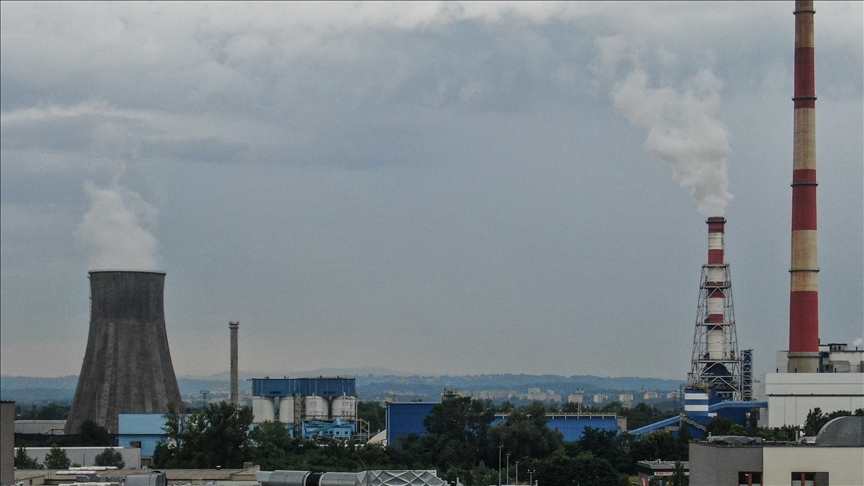
Global carbon emissions from fossil fuels are set to reach a record high this year, according to a recent report. Emissions are rising in the US and European Union but slowing down in China and India. If this trend continues, we could surpass the critical 1.5°C warming limit in just four years.
The latest Global Carbon Budget report paints a mixed picture. While renewable energy use is increasing and some regions have cut emissions, global warming is still on track to worsen. Researchers predict fossil fuel emissions will rise by 1.1% this year, totaling 38.1 billion metric tons of CO₂.
Anna Michalak from the Carnegie Climate and Resilience Hub highlighted that these findings show a significant regional shift in emissions, yet the overall trend is still upward. She emphasized the challenges in meeting the goals of the Paris Agreement, which aims to keep global warming below 1.5°C.
A separate report by the International Energy Agency warns that under current energy policies, we could face a nearly 3°C rise by 2100. Even with stronger clean-energy initiatives, global warming may still approach 2.5°C.
Glen Peters, a co-author of the Carbon Budget report, noted that while emissions in China have stabilized due to growing renewable investments, demand for global energy continues to rise. He remarked, “Eventually, emissions will peak. We just don’t know when.”
China’s emissions have nearly leveled off, with only a 0.4% rise expected this year. India’s emissions are forecasted to increase by 1.4%, partly thanks to an early monsoon that reduced cooling needs. In contrast, the EU is seeing a slight uptick due to colder weather increasing heating demands.
US emissions are projected to rise by 1.9%, driven by higher natural gas prices that have led to more coal use. Interestingly, emissions have fallen in over 35 countries in the past decade, even as their economies grew. Many developing nations have ramped up their solar and wind power capacities.
Professor Pierre Friedlingstein, a leading climate scientist, stressed the urgency of the situation: “We’re running out of time… but we can still see progress.”
Additional Insights
A recent survey conducted by the Pew Research Center found that 70% of Americans believe climate change is a serious problem, reflecting a growing public acknowledgment of the issue. Social media discussions often spotlight individuals and companies making concerted efforts in sustainability, which can inspire collective action.
As the situation evolves, the need for strong leadership and innovative solutions becomes increasingly clear. The world faces a pivotal moment where individual and collective actions can significantly impact our climate future. Addressing fossil fuel emissions will be critical in determining whether we can remain within safe warming limits. For further insights, check this International Energy Agency report.
Source link
China,EU,Global Carbon Budget report,global carbon emissions,India,US,Anadolu Ajansı
