
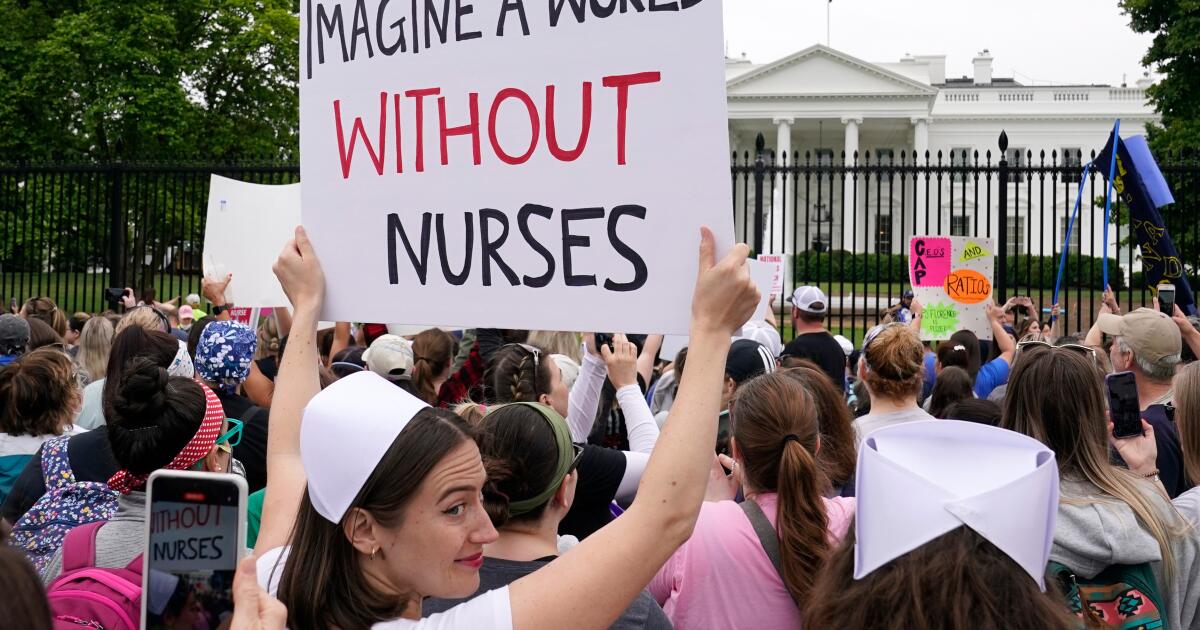
A proposal from the Trump administration to limit federal loans for graduate students has sparked outrage among nurses and other healthcare professionals. This change would strip some programs, like nursing, of their “professional” designation, leading to lower borrowing limits.
Now, students pursuing degrees in certain fields could find it harder to finance their education. Graduate students once had access to loans equal to their program costs, but the proposed change would cap annual borrowing at $20,500 for non-professional programs and up to $100,000 total. In contrast, professional programs would allow students to borrow up to $50,000 a year, topping out at $200,000.
The Education Department claims these limits aim to make colleges more accountable for their tuition rates. However, many argue that this new framework disregards the intensive training needed for careers in nursing and related fields. Jennifer Mensik Kennedy, president of the American Nurses Association, highlighted the urgency of this issue, stating that nurse practitioners are crucial to addressing the nation’s primary care shortage.
Statistics show that in 2022, one in six registered nurses held a master’s degree. This change could widen the already existing gap in advanced practice nurses—those who can diagnose and prescribe medication.
Social media is buzzing with reactions. One registered nurse with a large following expressed her frustration, saying, “They don’t want us to continue our education.” This sentiment resonates with many, particularly women who dominate the healthcare workforce.
Despite the Education Department’s assertions that most nursing students borrow less than these limits, experts like Lin Zhan, Dean of the UCLA School of Nursing, argue that the changes present significant barriers to entering the nursing profession. Zhan emphasized that the need for nurses trained at a graduate level is more crucial than ever, especially as patient care becomes increasingly complex.
Concerns also extend to historical contexts. In previous years, nurses and healthcare workers have been undervalued, often leading to recruitment challenges. As Deborah Trautman from the American Association of Colleges of Nursing noted, discouraging nurses from pursuing advanced degrees could further exacerbate workforce shortages.
Ultimately, this proposal raises serious questions about the future of nursing education and the healthcare system as a whole. It remains to be seen how public feedback will influence these changes, but one thing is clear: the healthcare community is watching closely.
For more details on the proposed changes, you can read the Education Department’s “Myth vs. Fact” sheet on their website.
Source link
