
Trump’s Support for Former Honduran President: An Unfolding Story
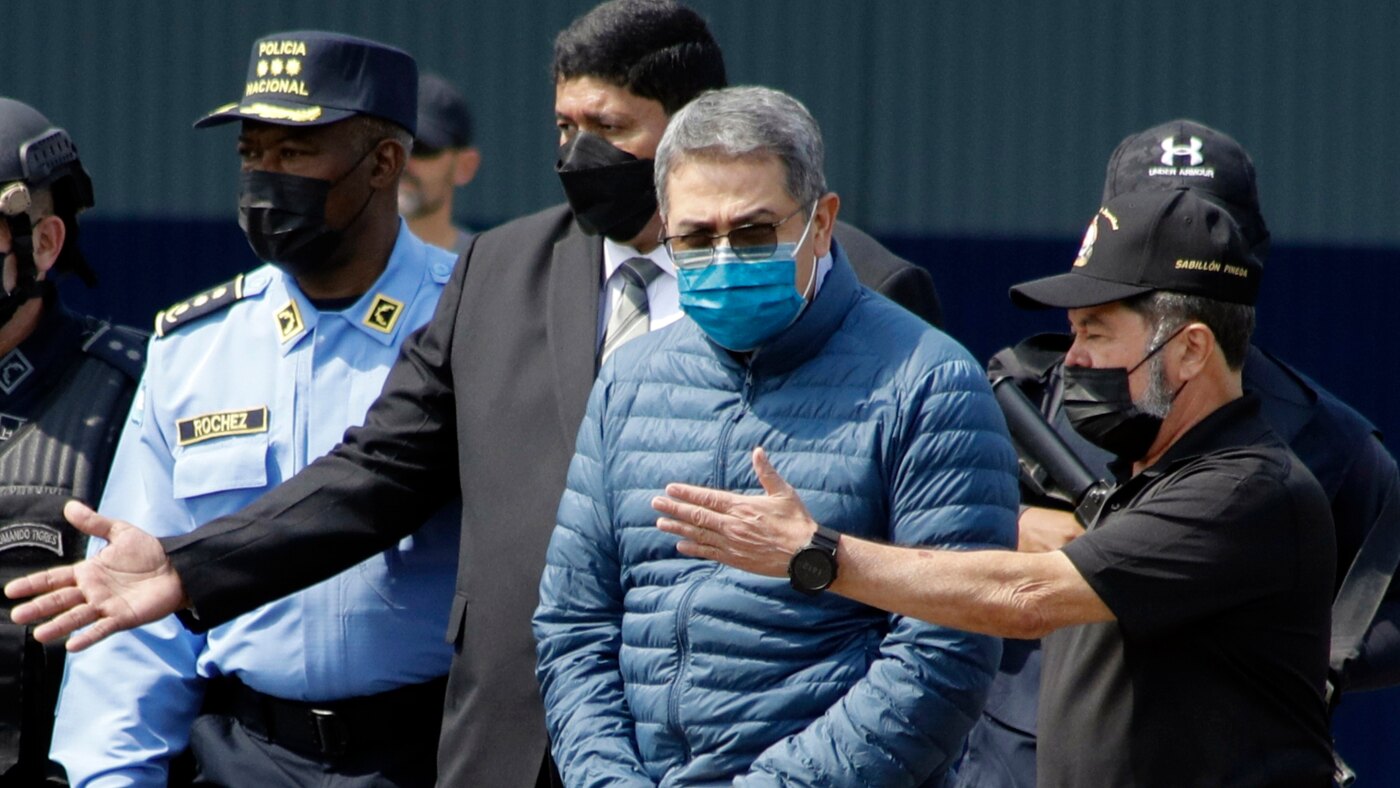
Recently, former President Donald Trump announced plans to pardon Juan Orlando Hernandez, the former president of Honduras. Hernandez is currently serving a 45-year prison sentence for drug trafficking and weapons charges. Trump shared this decision on social media, claiming that Hernandez was treated harshly.
Hernandez was found guilty in March 2023 of conspiring to import cocaine into the United States. He served two terms as Honduras’ leader, a country struggling with poverty and violence. His administration has been linked to widespread corruption, raising questions about governance in the region.
Hernandez’s lawyer, Renato Stabile, welcomed Trump’s announcement, stating it corrects a “great injustice.” He expressed hope for a stronger U.S.-Honduras relationship going forward.
Beyond Hernandez’s case, political tensions in Honduras remain high. Current president Xiomara Castro, known for her leftist views, has surprisingly maintained cooperative relations with the U.S., hosting high-level American officials.
The upcoming presidential election in Honduras is crucial. Tito Asfura, a conservative candidate, is running against strong contenders like Rixi Moncada from the ruling Libre party and Salvador Nasralla, a media personality making his fourth presidential run.
Trump’s comments tie the Honduran election to larger geopolitical themes. He cautioned that a loss for Asfura might lead Honduras down a path similar to Venezuela, currently under the controversial leadership of Nicolás Maduro.
This situation strikes a chord with a recent survey by the Center for Strategic and International Studies, indicating that 60% of Americans believe that U.S. support for democracy abroad is essential for national security. It’s a complex issue, reflecting deep ties between U.S. policies and the fates of smaller nations.
Social media has also reacted vigorously. Many on platforms like X (formerly Twitter) debate the implications of Trump’s decisions for future U.S.-Latin America relations, highlighting a mix of hope and skepticism about real change.
As the current political landscape evolves, the connection between the U.S. and Central America remains intricately woven, with each election potentially altering the maps of power and influence.
