
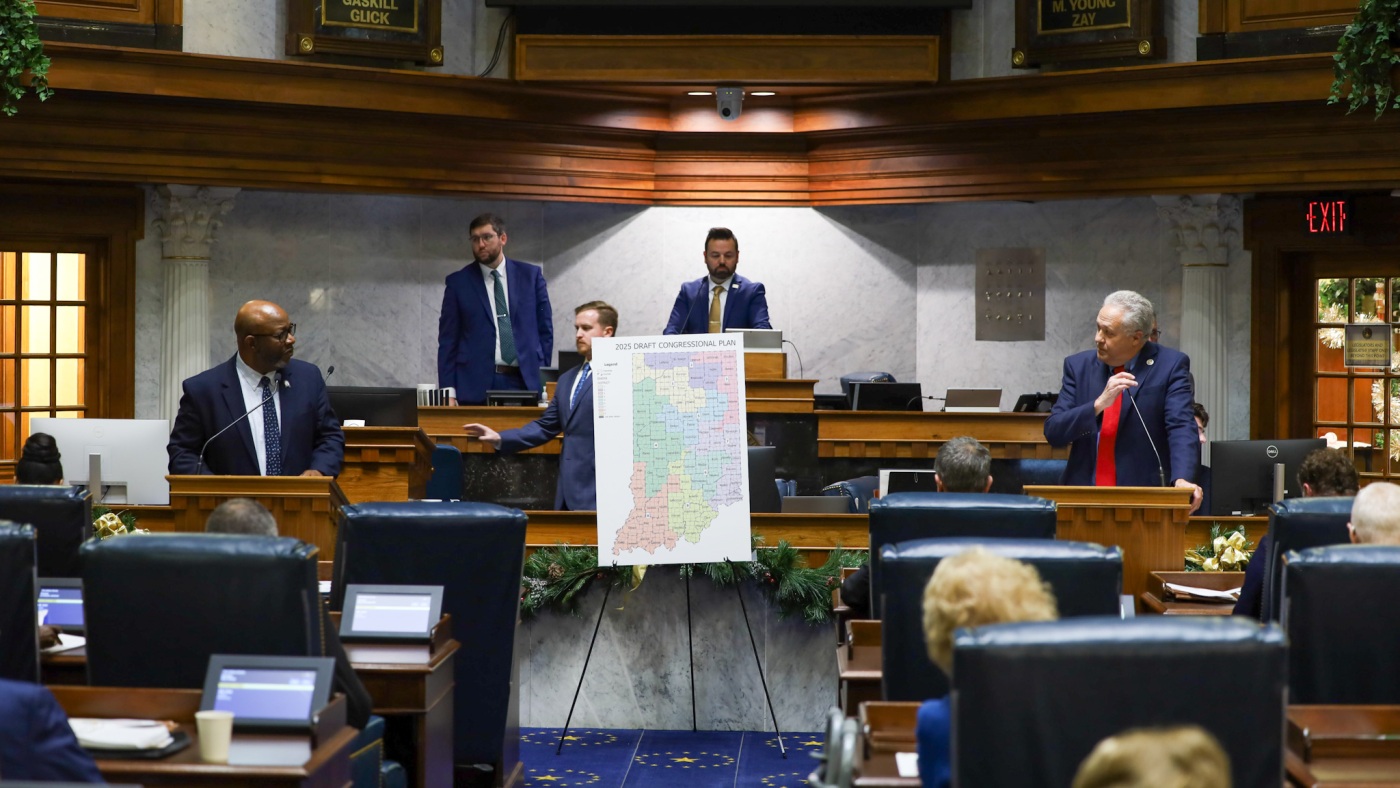
The Indiana Senate recently voted against congressional redistricting backed by former President Trump. The vote was 31 to 19, marking a surprising turn of events in a Republican-majority state where 40 of 50 senators belong to the GOP. This is the first time Trump’s push for mid-decade redistricting has faced such resistance from his own party.
State Senator Spencer Deery was vocal against the redistricting, stating, “My opposition to mid-cycle gerrymandering aligns with my conservative values.” He emphasized that shifting power to the federal government is not a true conservative approach.
Democrats in Indiana, who hold only two of the state’s nine U.S. House seats, also opposed the measure. They argued it would weaken the voting strength of minority communities.
Typically, redistricting occurs after the census every ten years. This unusual mid-decade effort is aimed at solidifying Republican control ahead of the 2026 midterms. While some red states, like Texas and North Carolina, have shifted their districts to favor Republicans, Indiana has opted not to join that trend.
The push for redistricting led to political unrest within the Indiana Senate. There were protests outside the chamber, with slogans like “Hoosiers fight fair.” Tensions ran high, as both Governor Mike Braun and Trump supporters threatened to challenge those senators who diverged from the redistricting plan.
The debate has exposed divisions among Republicans. Some lawmakers believe their constituents do not want changes made. The atmosphere became more intense as various officials faced anonymous threats over their stances on redistricting.
While Republicans who supported redistricting pointed out that Democratic states have historically redrawn districts to their advantage, critics argue that fairness and community representation should take precedence over political gain.
The Indiana vote showcases the complex nature of politics today, reflecting broader national trends that highlight the importance of redistricting in shaping the future of Congress. As noted, redistricting can determine legislative control. According to a 2022 report by the Brennan Center for Justice, gerrymandering has major implications for voter rights and representation.
In this moment of political upheaval, the outcome in Indiana may serve as a warning to GOP leaders about the limits of their current strategies, revealing that even a strong majority cannot take unity for granted.
For more details on this topic, you can check out NPR’s coverage.
