
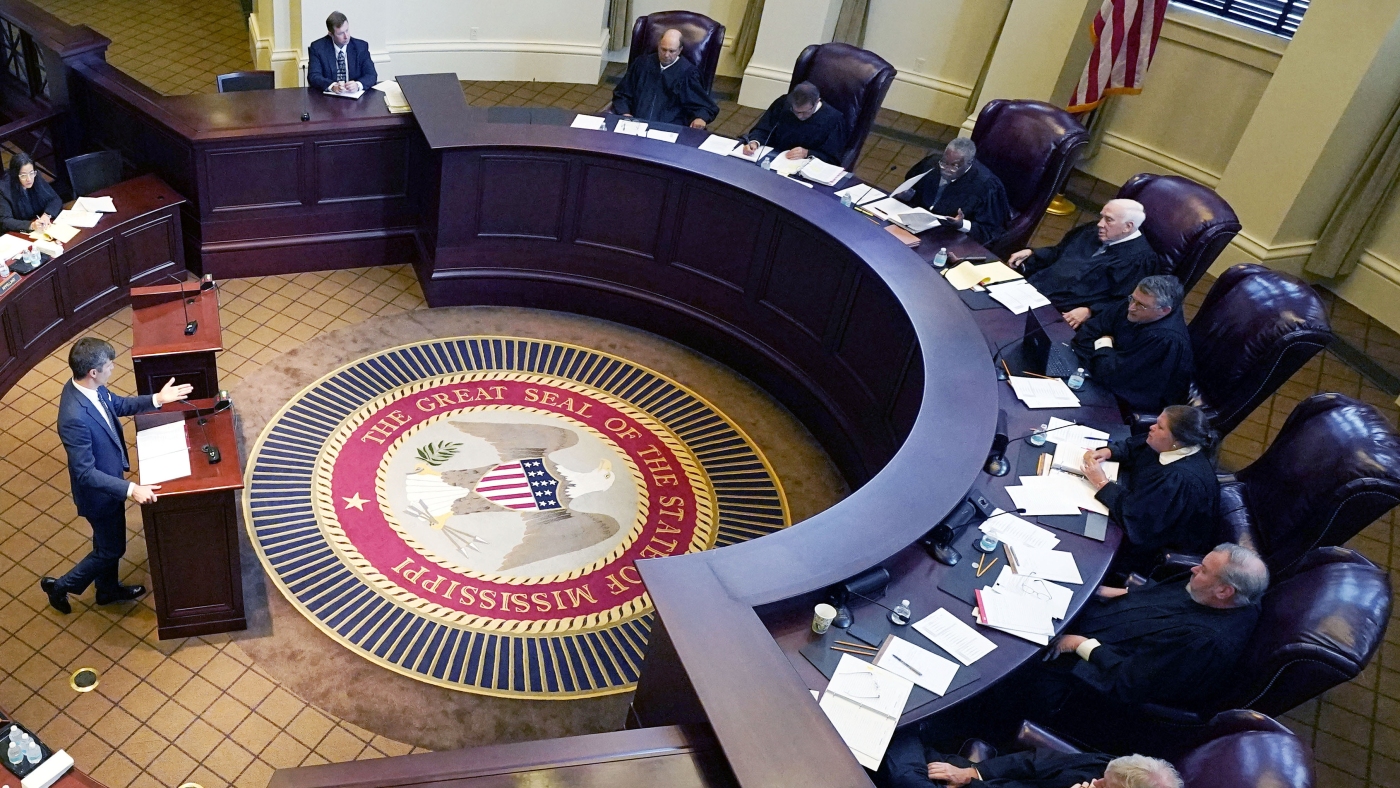
On July 6, 2023, Mississippi Supreme Court justices faced a significant turning point. A judge ordered special elections for the court, revealing that the existing electoral map violated the Voting Rights Act’s Section 2. This section aims to protect minority voters. The ruling is crucial, as it gives the Mississippi Legislature until late 2026 to redraw the map.
U.S. District Judge Sharion Aycock found that the current map, established in 1987, dilutes the voting power of Black residents. She emphasized that Mississippi is nearly 40% Black, yet has never had more than one Black justice on its nine-member Supreme Court. This disparity raises serious questions about representation.
Historically, Mississippi’s electoral map has faced scrutiny. In fact, previous attempts to address racial gerrymandering show a pattern of neglecting Black voter influence. According to a 2020 report from the U.S. Census Bureau, Black voters often find their collective power minimized in many states across the South. This leads to systemic inequalities, undermining democracy.
The recent changes trace back to a lawsuit by the American Civil Liberties Union (ACLU) in 2022. The ACLU argued that the map splits the Delta region, which has a rich Black heritage, thereby diminishing representation. “We couldn’t be happier to see justice on the horizon,” stated Ari Savitzky, a senior attorney with the ACLU. Their observations echo the frustrations of many Black voters seeking fair representation.
Currently, Section 2 of the Voting Rights Act is facing challenges at the U.S. Supreme Court. This adds another layer of complexity to Mississippi’s situation. Experts believe the outcome could reshape how future electoral maps are drawn nationwide.
What’s more intriguing is the public interest spurred by these developments. Social media has seen waves of commentary, with hashtags like #VotingRights and #FairMaps trending, showcasing a growing demand for equitable political representation. People are mobilizing, calling for better practices in how districts are formed.
In her ruling, Aycock mentioned that she would act quickly to facilitate the new elections after the legislature approves a new map. Until then, she has put off decisions about which seats will be up for special election. The pressure is on as the clock ticks down to November 2026.
Despite the positive strides, the Mississippi Secretary of State’s office has appealed Aycock’s ruling, putting future elections in a state of uncertainty. With a history of gerrymandering and exclusion, Mississippi stands at a crossroads, with an opportunity to create a more equitable electoral process. For more on this topic, you can read about it on the [ACLU’s official page](https://www.aclu.org/press-releases).
As Mississippi moves forward, the hope for change remains strong. Fair elections may finally become a reality, pushing for a justice system that accurately reflects its diverse population.
