
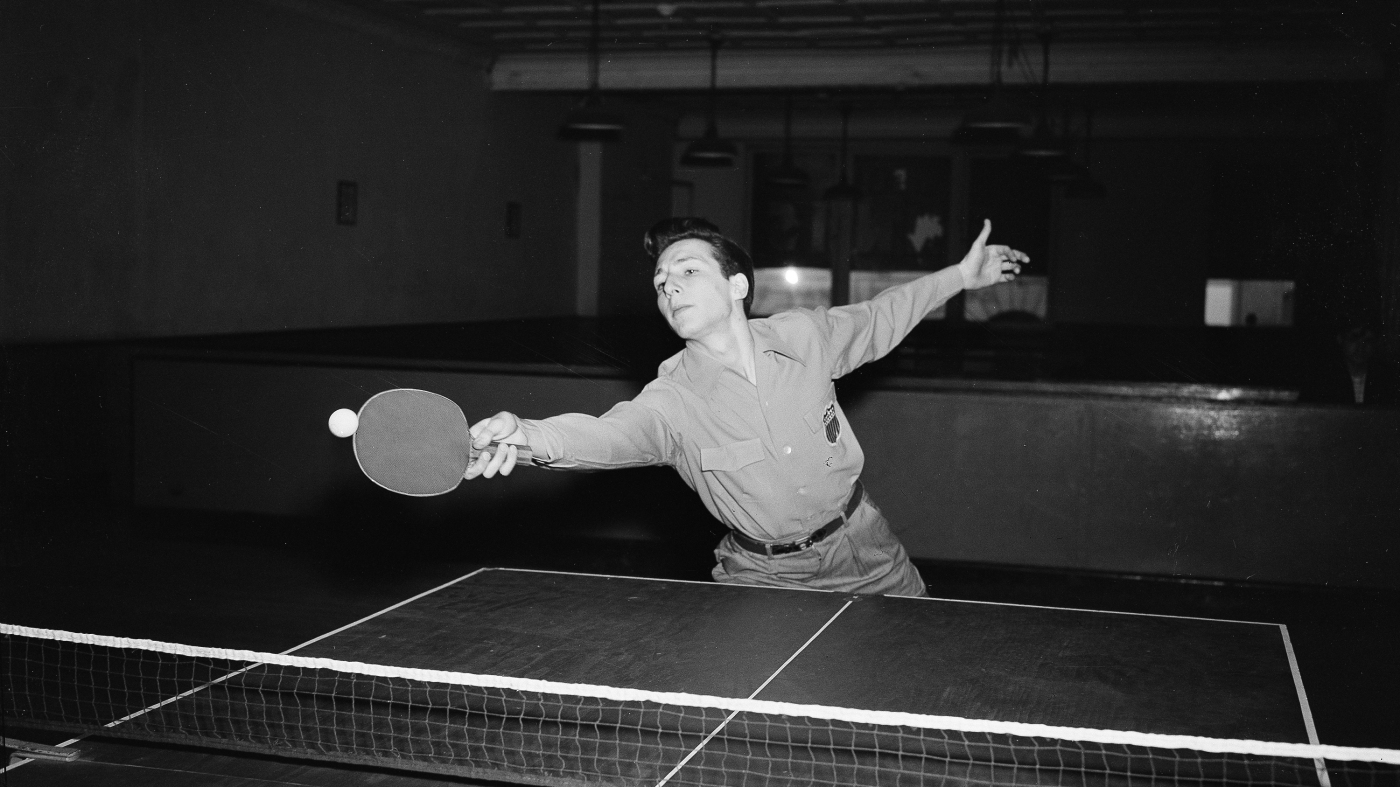
In the gritty 1940s and ’50s, New York City hosted a vibrant table tennis scene. This subculture attracted a mix of characters—from doctors to gamblers. Players could win big at venues like Lawrence’s, raking in hundreds overnight. Among them was a talented teenager named Marty Reisman, who stood out for his skill and unique style.
Known as “The Needle” for his slender frame, Reisman was a U.S. representative in international competitions, amassing over 20 major titles, including the prestigious 1949 English Open. His passion for the game was profound; in his memoir, he described table tennis as a blend of anatomy, chemistry, and physics.
Reisman wasn’t just a player; he was a showman. Khaleel Asgarali, a pro player, noted his charisma and flair, which made him unforgettable in the sport. Reisman often wore stylish suits, turning heads at tournaments. His rebellious nature also earned him a place as one of the game’s “bad boys.” In a famous incident in 1949 at the English Open, he and teammate Dick Miles ran up a hefty hotel bill, leading to a fine and a suspension from table tennis for defying etiquette norms.
Born into a challenging environment on Manhattan’s Lower East Side, Reisman’s home life was tumultuous. With a taxi driver father and a waitress mother, he found an escape in table tennis. His hustle was innate, often found crashing weddings just to snag a feast before heading off to hustle matches. Despite suffering panic attacks from a young age, Reisman found calm at the table. “The game engrossed me, so filled my days, that I did not have time to worry,” he wrote.
His pursuit of excellence in the sport was relentless. Reisman aspired not just to play but to be an icon—comparable to greats like Einstein or Hemingway. He viewed table tennis champions as the ultimate embodiment of success and creativity.
The recent film *Marty Supreme* revives this extraordinary world, inspired by Reisman’s life. Josh Safdie, the film’s co-writer and director, connects his own struggles with Reisman’s journey. Growing up with ADHD, Safdie found ping pong helped him focus, making Reisman’s story resonate deeply. After discovering Reisman’s memoir, he was inspired to tell this story, reflecting on the challenges and dreams of a player often overlooked by society.
A significant moment in table tennis history came in 1952, when Hiroji Satoh introduced a new type of racket. This change shifted the dynamics of the game, which Reisman lamented. He would often critique how this new tech transformed the sport, saying it ruined the sound and excitement of the traditional hardbat game he loved.
Reisman eventually opened the Riverside Table Tennis Club, a beloved venue that attracted notable figures like Matthew Broderick and Dustin Hoffman. Even in his later years, he remained a force in the sport, winning the U.S. Hardbat Championship at the age of 67.
Marty Reisman passed away in 2012. A *New York Times* profile of him, titled “A Throwback Player, With a Wardrobe to Match,” captured his flair for style and his enduring legacy in table tennis.
