
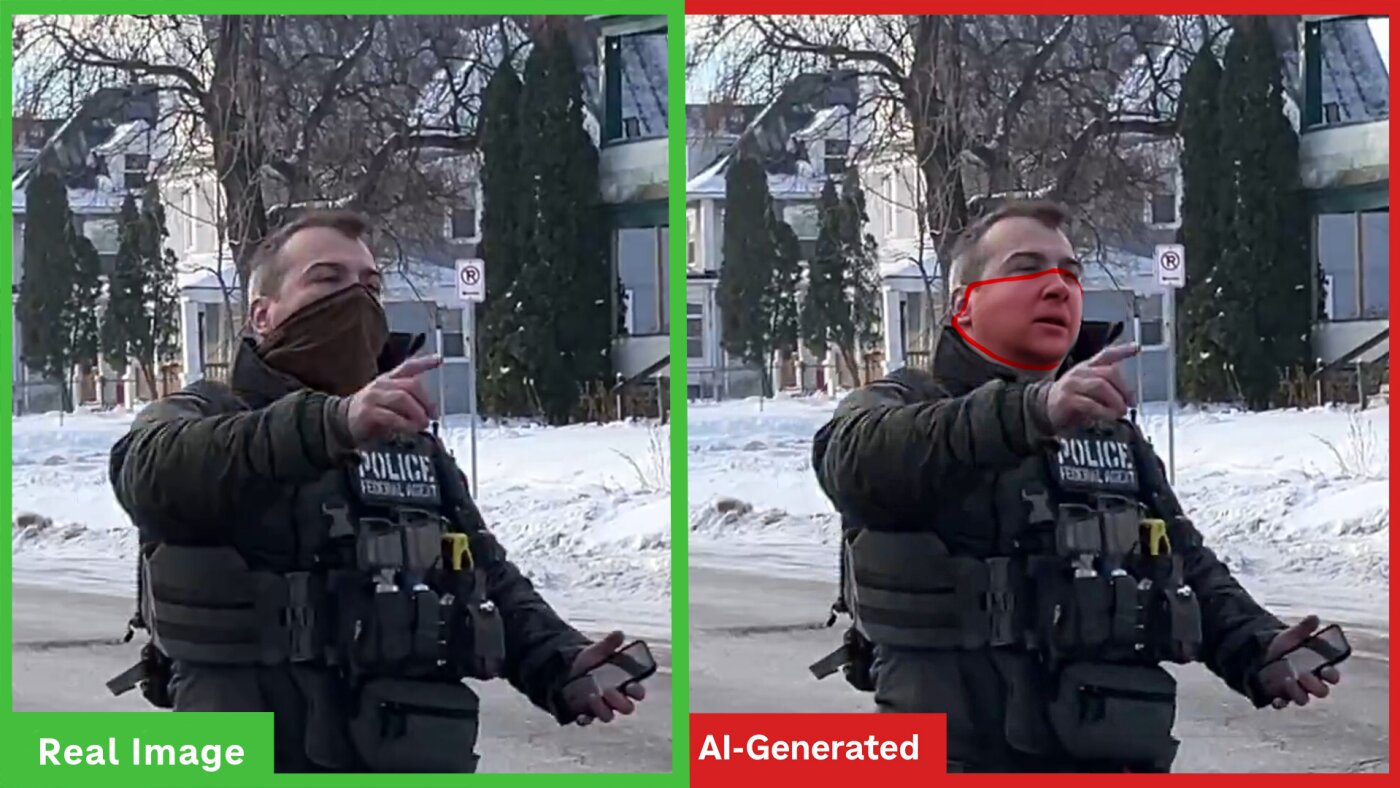
In the wake of a tragic shooting that claimed the life of 37-year-old Renee Good in Minneapolis, a troubling trend emerged on social media. An image of the ICE agent involved in the incident circulated widely, generating significant controversy.
Initially, eyewitness videos showed the agent masked during the event. However, other posts depicted an “unmasked” version of the agent, seemingly created by xAI’s Grok, an AI chatbot. Users on X (formerly Twitter) directed the bot to “unmask” the agent, resulting in the manipulated image that spread rapidly.
“NPR is sharing both versions of the images to illustrate how AI can distort reality,” an NPR report noted. Experts are raising alarms about this use of AI. Hany Farid, a digital image analysis professor at UC Berkeley, highlighted that AI can create convincing but ultimately false representations. This “hallucination” effect means that while the images may look clear, they might not reflect the truth of the person’s actual appearance.
As the AI-generated image gained traction, a name linked to it, Steve Grove, surfaced. However, this led to a wave of backlash directed at two individuals with that name who were not connected to the incident. One was a gun shop owner in Missouri, and the other was the publisher of the Minnesota Star Tribune. The newspaper reported the situation was part of a coordinated disinformation campaign, urging the public to rely on verified news rather than social media rumors. They emphasized the importance of following established, trustworthy news outlets.
Beyond the immediate implications of this event, it raises broader questions about AI’s role in society. According to a 2023 survey by the Pew Research Center, 72% of experts believe AI will significantly impact information authenticity in the coming years.
This incident reflects a growing concern over how AI could influence public perception and political discourse. The discussion surrounding AI-generated content isn’t just about images; it stretches into how it can sway opinions and shape narratives.
In light of the digital landscape’s constant evolution, understanding the limits of AI is essential. Experts warn that while AI tools offer creative possibilities, they also carry risks. Misinformation can spread faster and create chaos, impacting innocent people’s lives.
Ultimately, as this tragic story unfolds, it serves as a reminder: we must remain vigilant about the information we share and seek the truth in a world increasingly complicated by technology.
