
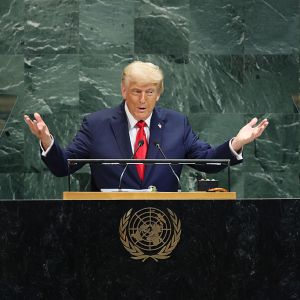
On a Wednesday night in late September 2025, President Trump announced a significant shift: the U.S. would withdraw from the United Nations Framework Convention on Climate Change (UNFCCC). This treaty has been essential for international climate discussions since the early 1990s.
This decision followed a review by the Trump Administration, which evaluated the U.S. involvement in various international organizations. So far, the U.S. has pulled out of 66 international organizations, including notable ones like the U.N. Oceans and the International Renewable Energy Agency.
Being the first country to step away from a framework it helped establish raises eyebrows. Jake Schmidt, a senior director at the Natural Resources Defense Council, pointed out that it sends a troubling message about America’s commitment to tackling climate change. Interestingly, nations like Russia and Iran, not exactly known for their environmental leadership, are still part of the agreement.
Despite this withdrawal, some experts feel the impact will be minimal. Max Holmes from the Woodwell Climate Research Center noted that the Trump Administration has already halted numerous climate initiatives. So, leaving the UNFCCC may not change much in practice.
Schmidt emphasized that the U.S. is missing out on a major economic opportunity. The Inflation Reduction Act and evolving investments show that the country could be a frontrunner in the clean energy market. Instead, these recent actions may hinder its progress.
Simon Stiell, the UNFCCC executive secretary, weighed in, stating that stepping back from global climate leadership will likely harm the U.S. economy. He argued that worsening climate disasters will lead to increased costs and instability for American families and businesses.
Despite the federal shift, there remains a silver lining. Local and state governments across the U.S. continue to pursue climate initiatives, ensuring that progress isn’t entirely stalled. As Holmes put it, “Just because the federal government tries to stop things doesn’t mean everything stops.”
While the global community moves forward, experts highlight an important trend. The upcoming U.N. climate conference, COP30, showed that while the U.S. stayed on the sidelines, countries around the world pushed ahead with their climate goals. This continued effort sends a clear message: the world is serious about climate action, regardless of the U.S. position.
In recent polls, a significant portion of Americans still prioritize climate change as a crucial issue. The public sentiment appears frustrated but hopeful, seeking a robust response to environmental challenges. This reflects an ongoing dedication to address climate issues, even if federal policies won’t align in the immediate future.
In the end, while the U.S. took a step back, the global climate movement presses on, demonstrating resilience in the face of uncertainty. For those concerned about the planet’s future, local actions are still a source of hope.
For more information on the implications of this decision, check the Natural Resources Defense Council for expert insights.
Source link
President Trump, Trump Administration, Jake Schmidt, international organizations, climate action, U.S., Ecosystem Services, clean energy
