
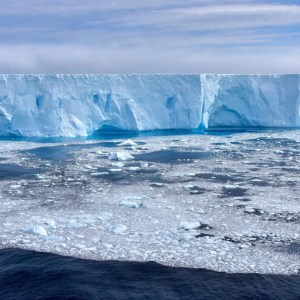
A shift in Antarctica’s ice could have big effects on oceans worldwide. This change may disrupt weather patterns and threaten global food security.
### The Research
Researchers from the University of Queensland ran simulations to study the Cape Darnley region. They wanted to see how dense shelf water is created and how it impacts ocean salinity and density. Their findings indicated that faster melting of ice shelves and less sea-ice formation are the main causes of changing density levels. The study revealed that a drop in sea ice could lead to a nearly 36% reduction in dense shelf water.
Dr. David Gwyther, the lead researcher, noted, “This dense water sinks and flows north, acting like a conveyor belt that drives ocean currents and influences the global climate.”
When ice shelves melt quickly, less dense shelf water forms. This weakens the deep ocean system and alters global ocean dynamics and weather patterns.
### Why It Matters
Even though this research is based on simulations, real changes are already happening in Antarctica. From 2000 to 2020, the northward flow of bottom water from Antarctica decreased by roughly 12%, according to the National Oceanic and Atmospheric Administration. In the Arctic, sea ice is disappearing at a rate of about 13% each decade, as reported by the World Wildlife Fund. This loss can lead to higher tides and increased disease risks.
The combined impact of melting polar ice adds fresh water to the oceans, making it difficult for heavier water to sink. This slows down ocean circulation and could cause shifts in weather patterns far from the poles. Warmer temperatures, which may contribute to extreme weather events, arise from these changes.
Moreover, the impact on marine biodiversity is significant. Slow movement of bottom water limits the distribution of oxygen and nutrients. Changes in salinity may destabilize ecosystems, disrupting food chains crucial for coastal communities and global food supplies.
### Taking Action
Scientists are on the front lines, monitoring ice and ocean systems to provide early warnings and develop solutions to slow these negative effects. Education about how polar changes influence daily life is vital to fostering action.
Individuals can engage in local efforts to reduce pollution that speeds up ice melt and slows sea-ice formation. Awareness and action can help protect our oceans and the habits that depend on them.
Recent social media trends have also highlighted public concern about climate change, with many sharing ways to reduce their carbon footprint and promote sustainability. It’s clear that understanding the global impact of our actions can lead to a collective effort to safeguard our environment.
For more insights on climate-related issues and ways to contribute positively, refer to the National Oceanic and Atmospheric Administration’s resources on ocean monitoring.
Source link
Antarctica, University of Queensland, weather patterns, shelf water, oceans, dense water, ocean systems, global currents, Arctic sea ice
