
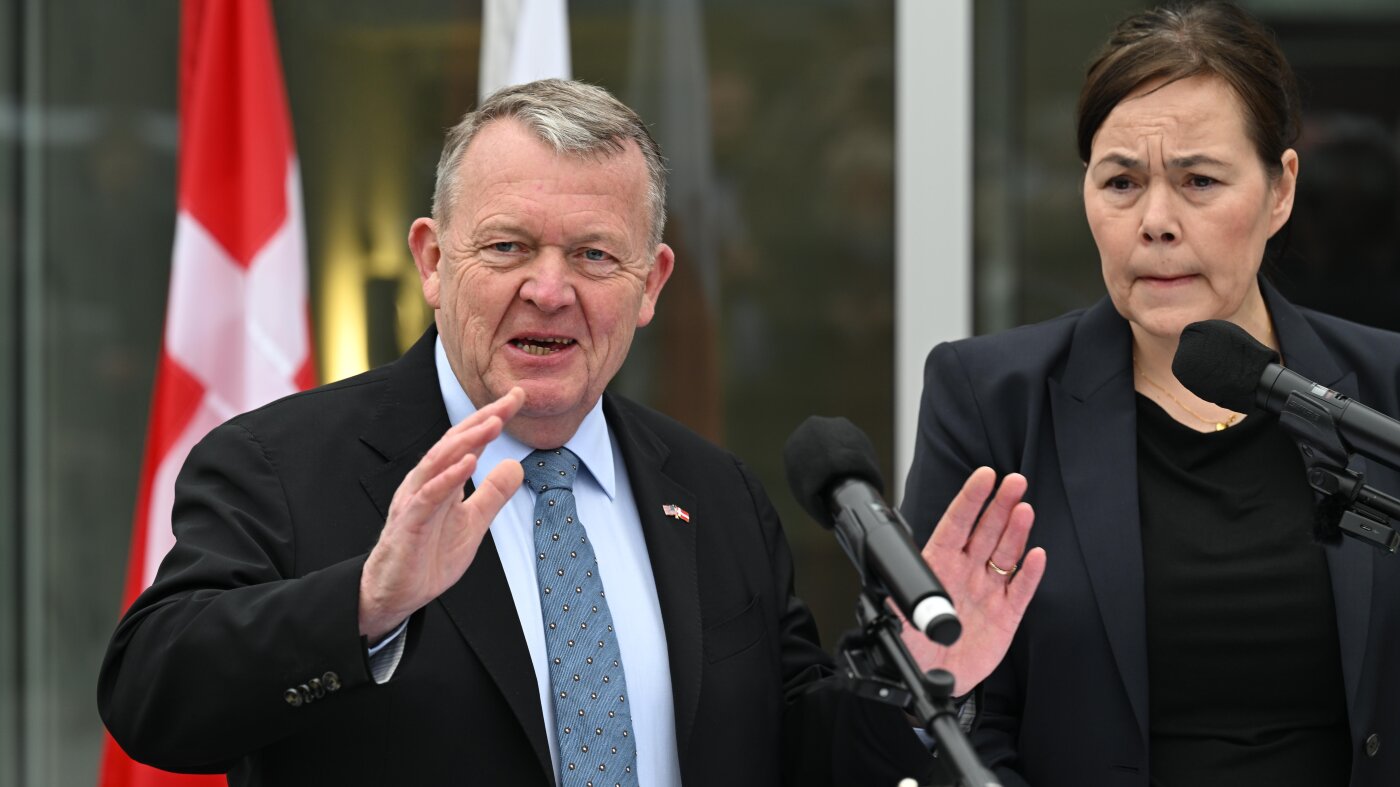
Danish and Greenlandic Officials Discuss Greenland’s Future with the U.S.
A significant meeting took place recently in Washington, D.C., where Danish Foreign Minister Lars Løkke Rasmussen and Greenland’s Foreign Minister Vivian Motzfeldt met with U.S. officials, including Vice President JD Vance and Secretary of State Marco Rubio. The discussions centered on Greenland, with President Trump’s ongoing interest in U.S. control over the territory.
The Danish foreign minister described their talks as marked by a “fundamental disagreement” on the issue. However, both sides agreed to form a working group to explore common ground and address American security concerns while respecting Denmark’s sovereignty.
U.S. Interests in Greenland
Trump has argued that Greenland’s strategic location is key for U.S. national security and claims that NATO should take a leading role in acquiring it. He expressed that having Greenland under U.S. control is the only acceptable option, citing threats from China and Russia.
In response to these claims, Denmark has announced plans to increase its military presence in the Arctic. This includes new exercises with NATO allies to strengthen security in the region.
Greenlanders’ Perspective
Interestingly, many Greenlanders seem opposed to becoming part of the U.S. A local comment on social media succinctly conveyed this sentiment: “Why don’t you ask us?” This reflects a broader sentiment among residents, many of whom value their ties to Denmark, particularly in terms of healthcare and education.
Jens-Frederik Nielsen, Greenland’s Prime Minister, recently affirmed, “If we have to choose between the United States and Denmark, we choose Denmark.” This is indicative of a strong cultural and political alignment with Denmark, even amid U.S. military interests in the region.
Military Concerns and Local Opinions
Denmark’s Defense Minister, Troels Lund Poulsen, highlighted the increasing military activities in the Arctic amid a rapidly changing security landscape. Other NATO countries are also sending troops and resources to enhance their presence in Greenland.
However, local voices call for a more realistic assessment of threats. Lars Vintner, a heating engineer in Greenland, humorously noted, “The only Chinese I see is when I go to the fast food market.” Such comments illustrate skepticism toward the perceived military threats that are cited as reasons for U.S. interest in the area.
Balancing Interests and Local Needs
Experts argue that U.S. claims regarding security and military threats are exaggerated. The reality could be more about accessing Greenland’s untapped natural resources as climate change opens up new possibilities for trade routes and mineral extraction.
Denmark allows the U.S. military to maintain a presence in Greenland under a 1951 treaty, giving the U.S. rights to establish bases with Denmark’s consent. Yet many residents, like university student Mikaelsen, appreciate the benefits of being part of Denmark and fear losing these advantages if the U.S. takeover were to happen.
As diplomatic talks continue, it’s clear that both Greenland and Denmark are committed to maintaining their distinct identities while navigating the complex dynamics of U.S. interests in the Arctic. The situation remains fluid, highlighting the importance of considering local perspectives in international discussions. For further insights, you may want to check the Council on Foreign Relations for in-depth analyses on Arctic tensions and security policies.
