
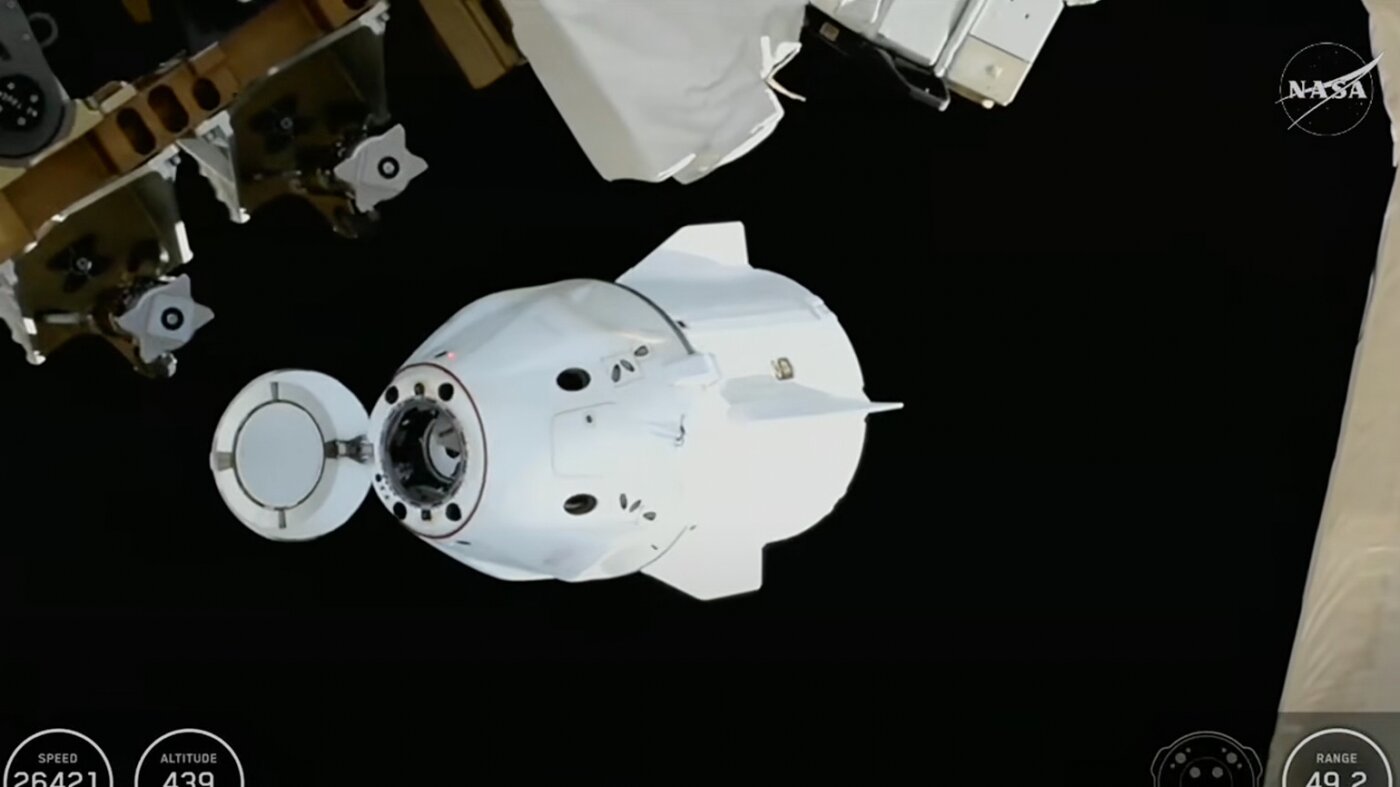
Four astronauts on NASA’s Crew-11 mission made a splashdown in the Pacific Ocean off San Diego after a nearly 10-hour trip back from the International Space Station (ISS). This mission is remarkable because it marks the first medical evacuation in NASA’s history, cutting the mission short for health reasons.
The Crew-11 team – including NASA’s Zena Cardman and Mike Fincke, Japan’s Kimiya Yui, and Russian cosmonaut Oleg Platonov – undocked from the ISS at 5:20 p.m. EST on Wednesday and landed at 3:41 a.m. EST Thursday. Their mission lasted 167 days, with 165 of those spent on the space station, where they logged over 2,600 orbits of Earth.
Interestingly, this evacuation is not just a unique event for NASA. It’s a timely reminder of past space missions where health issues played a role but didn’t lead to early returns. Historical precedents, like the Skylab missions in the 1970s, had their challenges, but they managed to avoid early returns due to medical conditions.
NASA has kept the specific medical issue and astronaut’s name private, citing health privacy concerns. However, the conditions were serious enough to cancel a planned spacewalk. Experts warn that prolonged exposure to microgravity can exacerbate health problems. As noted by Dr. Robert Zubrin, an aerospace engineer, the health impacts of space travel are well-documented, making health precautions vital.
Social media reactions reflect mixed feelings. While many expressed relief that the astronauts are back safely, some shared concerns about the risks of long-duration space missions. Recent studies show that anxiety and health issues can occur in astronauts after extended missions.
Now, with only three astronauts remaining aboard the ISS, researchers worry about fewer experiments and maintenance tasks. While the future mission, Crew-12, is expected to launch in February 2026, the crew’s scale-back raises questions about maintaining ongoing research. The ISS typically hosts seven operational crew members, so this reduction could impact productivity.
There’s a balance to strike between exploration and health precautions in space travel. Engaging with health experts might be more critical than ever as we continue pushing the boundaries of human spaceflight.
Source link
