
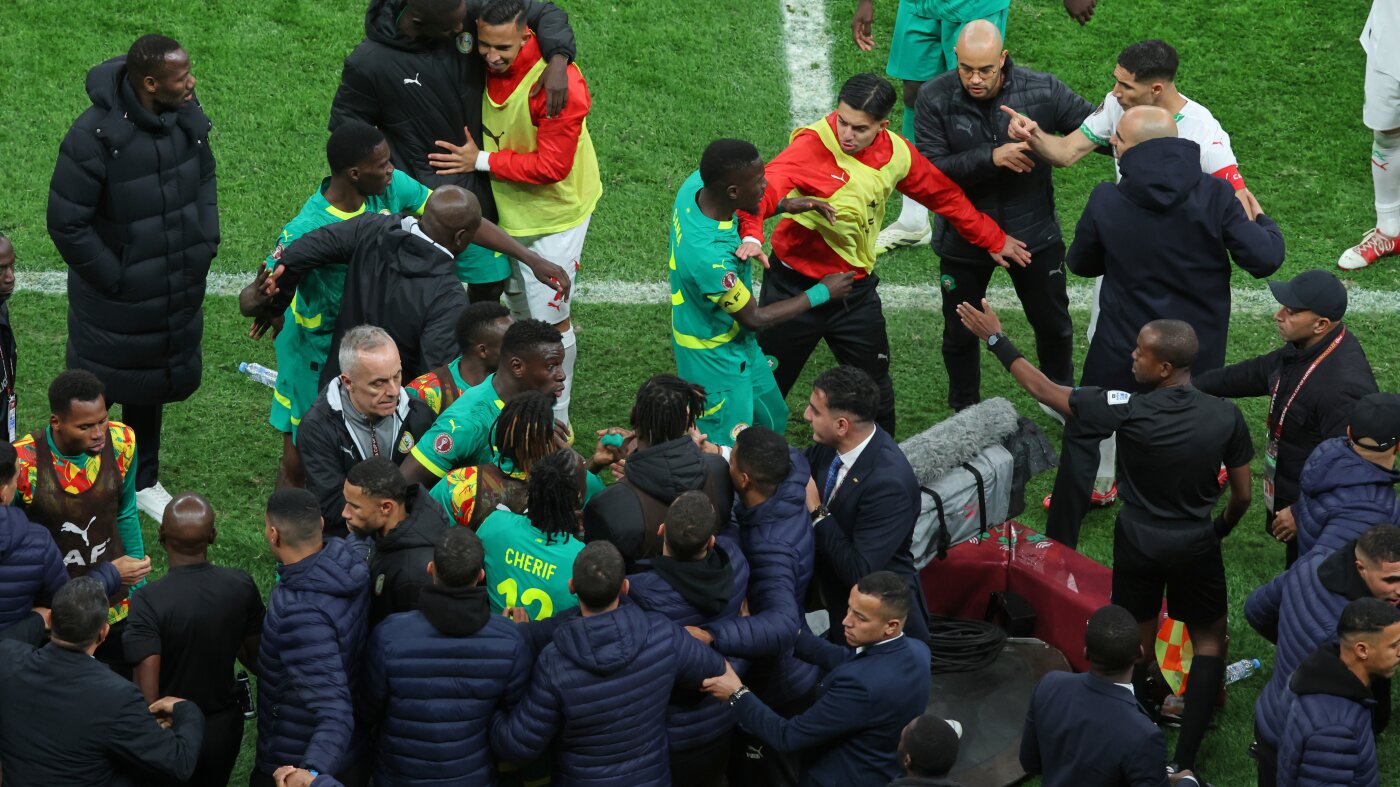
African Cup Chaos: A Dramatic Final in Rabat
The recent African Cup of Nations final was anything but calm. On January 18, 2026, Senegal faced Morocco in a match that ended up overshadowed by chaos. After a controversial penalty was awarded to Morocco in the dying minutes, Senegal’s coach, Pape Thiaw, led his players in a walk-off protest. This dramatic scene not only disrupted the game but also led to hefty fines and suspensions announced by the Confederation of African Football (CAF).
Fines and Bans
The CAF imposed over $1 million in fines. Senegal’s soccer federation faced penalties of $615,000, while Morocco was fined $315,000. Players from both teams also received suspensions. Senegal’s Thiaw was barred from coaching five games and fined $100,000.
According to a CAF statement, these sanctions reflected unsporting behavior, improper conduct, and violations by coaching staff and fans. Experts suggest that such measures aim to uphold the integrity of African football.
A Tumultuous Scene
The final itself was marked by intense emotions and incidents. Fans attempted to storm the field, and on the sidelines, players clashed. During the match, Moroccan ball boys even tried to distract Senegal’s goalkeeper, Edouard Mendy, causing a scene that observers deemed “shameful.”
Despite the disruptions, the game resumed after a 15-minute delay. Senegal eventually won 1-0 after extra time, capturing their first African Cup title. However, the drama surrounding the match raised serious questions about the organization and sportsmanship involved.
Reactions and Implications
Social media buzzed with reactions, illustrating the public’s outrage and confusion. Many took to platforms like Twitter to express their thoughts, labeling the final a “farce” and calling for changes in management.
Political leaders from both countries reacted as well. Senegal’s Prime Minister Ousmane Sonko described the reactions to the events as emotional rather than political. In Morocco, human rights organizations criticized the negative treatment of sub-Saharan Africans, highlighting a troubling narrative around race.
Learning From the Past
Looking back at previous tournaments, such as the 2019 final, it’s evident that tensions can arise in high-stakes matches. This year’s chaotic final has drawn comparisons to past incidents, emphasizing the need for improved conflict resolution and crowd management.
As Morocco prepares to co-host the upcoming 2030 World Cup alongside Spain and Portugal, the fallout from this match puts their candidacy under scrutiny. The new Hassan II Stadium, expected to hold 115,000 fans, has lofty ambitions, but the recent events might impact international perceptions.
The African Cup of Nations final offered a vivid glimpse into the passionate world of football—full of highs, lows, and lessons that, if learned, could shape the future of African soccer.
For more on the implications of sports controversies, check out CAF’s official regulations.
