
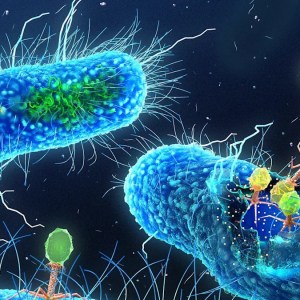
Bacteria and their natural enemies, bacteriophages, are locked in a constant battle. This unseen conflict happens daily, with billions of these viruses living inside your gut. While bacteria evolve to survive, so do bacteriophages, leading to an ongoing “arms race.”
A recent study published in PLOS One explores this fascinating relationship, revealing how these interactions change in microgravity aboard the International Space Station (ISS). Researchers from the University of Wisconsin-Madison studied how a strain of Escherichia coli (commonly known as E. coli) reacts to a T7 bacteriophage, both on Earth and in space.
The study found that while these viruses eventually infect the bacteria in both environments, their strategies differ. In space, the phages were slower to attack. However, they still mutated to enhance their ability to latch onto bacterial cells. The bacteria, in turn, developed new defenses against these phages in the microgravity setting.
According to the researchers, “Space fundamentally changes how phages and bacteria interact.” This unique dynamic could provide insights into creating more effective treatments for antibiotic-resistant bacteria, known as antimicrobial resistance (AMR). The World Health Organization has flagged AMR as a major threat to public health.
Interestingly, using microgravity for scientific exploration isn’t new. In late 2022, the International Atomic Energy Agency sent seeds to the ISS, aiming to induce beneficial genetic mutations for agriculture. This underscores the potential of studying biological interactions in space to bring benefits back to Earth.
As scientists continue exploring these space-driven adaptations, the hope is that such research can aid in our fight against AMR superbugs, offering innovative solutions we hadn’t imagined before.
Source link
International Space Station, bacteria, T7 bacteriophage, microgravity environment, bacteriophages, Escherichia coli
