
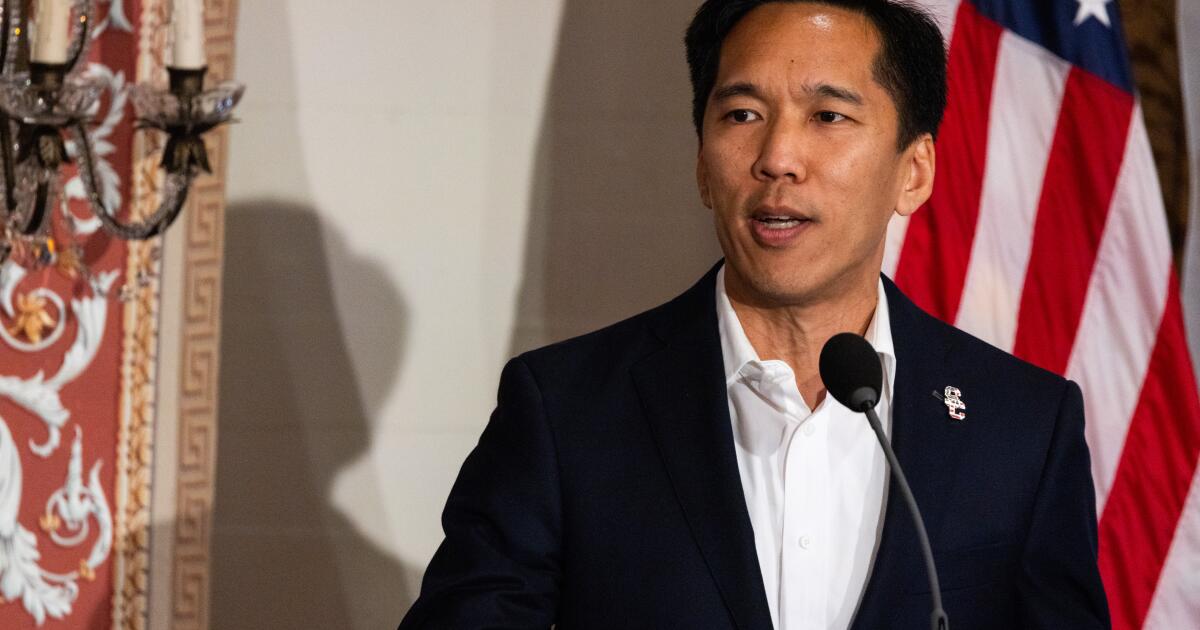
When USC named Beong-Soo Kim as interim president last year, he wasn’t in the running for the top job. Now, after seven months, he has tackled tough challenges, including a $200 million budget deficit that led to over 1,000 layoffs. He must also navigate pressures on higher education from various fronts: political shifts, the rise of artificial intelligence, and ongoing debates about the value of college.
USC’s board of trustees recently selected Kim as their top choice for the permanent position. Suzanne Nora Johnson, chair of the board, praised him as a “pivotal leader for a changing world.” Kim, 53, now steps into a role that demands strong leadership during turbulent times for both USC and higher education as a whole.
Challenges Ahead
Kim faces lingering concerns from faculty and staff after the layoffs. Labor unions have expressed frustration over communication regarding the university’s finances. USC notably declined an offer from the Trump administration that would have restricted international enrollment and enforced conservative campus policies.
Current pressures on universities include calls to reduce diversity, equity, and inclusion programs, as well as debates around education costs. Kim has taken steps to embrace technology; USC recently purchased a $3.1 million subscription to ChatGPT for faculty and students. He also co-hosted USC’s first AI conference, indicating a forward-thinking approach.
Financial Outlook
In an interview, Kim expressed optimism about USC’s financial future. “We’re in a much stronger position now, with opportunities ahead,” he said. While federal funding for research is tightening, he noted that USC’s research expenditures are increasing. He emphasized a commitment to fostering intellectual curiosity and diverse viewpoints among students and faculty.
Kim’s Journey to Leadership
A 20-person search committee met for about a year before recommending Kim. Co-chaired by trustees from various backgrounds, the committee received a flood of support for Kim from faculty, staff, students, and alumni. He previously worked as USC’s top lawyer and handled significant issues like the Varsity Blues admissions scandal and the university’s response to the COVID-19 pandemic.
Kim’s background stands out; unlike many other university leaders, he does not come from an academic administration. He has extensive legal experience and has been involved in critical decision-making at USC during tumultuous events.
Personal Connection
Kim’s connection to USC runs deep. He grew up in a family of USC graduates and recalls childhood visits to the campus, filled with excitement for the Trojan spirit. He shared a heartfelt memory of his mother, a former teacher, who inspired him with her dedication to education.
As Kim embarks on this new chapter at USC, he embodies a blend of experience, dedication, and personal history that many hope will lead the university through its current challenges and into a brighter future.
For those interested in deeper insights about the evolving landscape of higher education, check the Pew Research Center’s report on education trends and stay informed on USC’s developments.
