
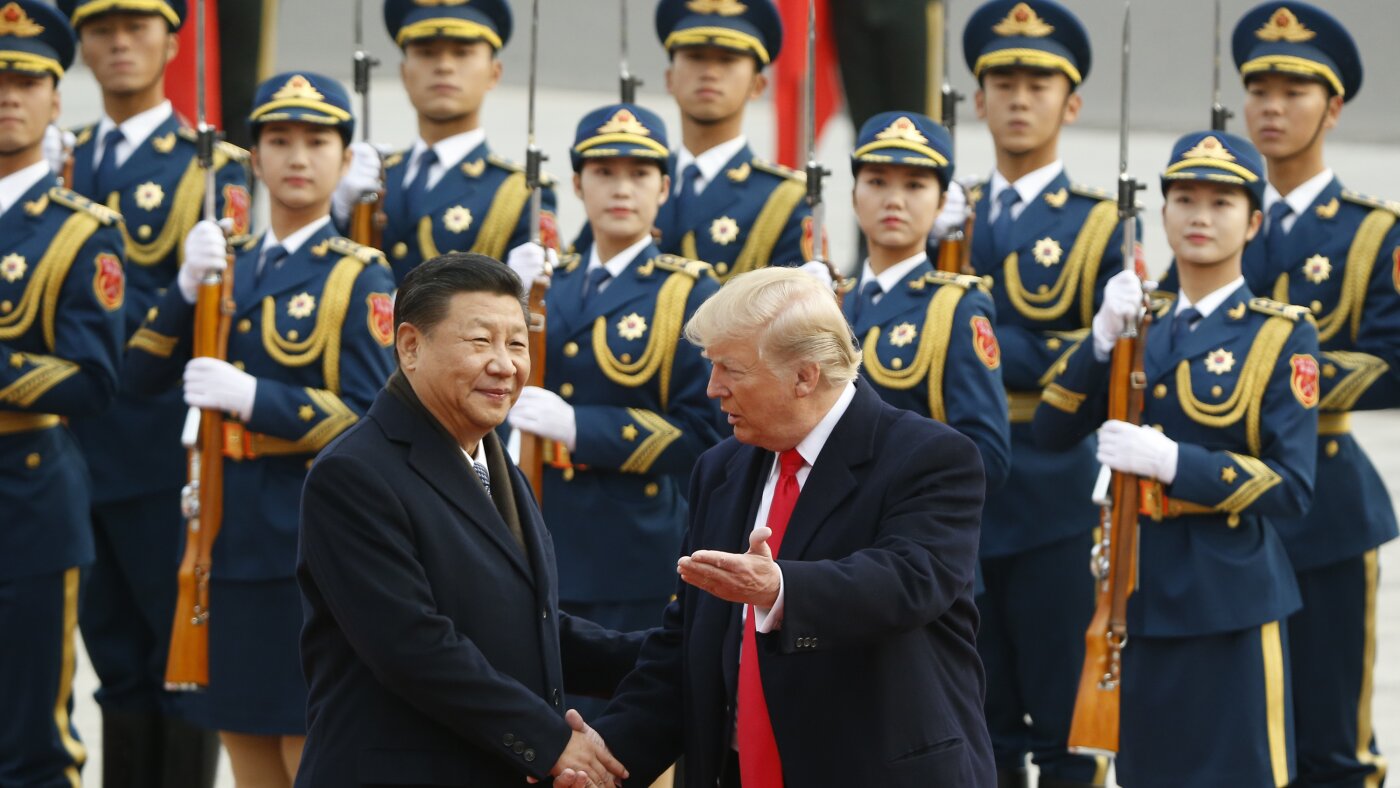
This year, the Trump administration has shifted its focus to the Americas. Key events include the forceful ousting of Venezuela’s leader and interest in Greenland. While the U.S. once viewed China as its main rival, it seems less threatened by recent U.S. actions.
China fears American military intervention could threaten its regime stability. Tong Zhao, a weapons and security expert at the Carnegie Endowment, explains, “For China, U.S. willingness to intervene is a major concern.” The history of U.S. interventions, especially since the Cold War, has led to heightened vigilance in Beijing.
In the early days of the People’s Republic, China sent millions of troops to Korea during the 1950s. Later, the U.S. invasion of Iraq raised alarms without U.N. approval. Experts like Chu Shulong from Tsinghua University suggest that China now looks at U.S. actions through two lenses: whether they violate the U.N. Charter, and if they threaten China’s security.
While China has criticized U.S. moves in Venezuela and its Greenland interests, it hasn’t reacted strongly. Instead, China seeks to maintain stable relations with the U.S. to prevent further disruption. “China is more focused on preserving ties with Trump than reacting aggressively,” Chu says.
Despite its concerns, China sources about 4% of its crude oil from Venezuela. Jiang Shixue from Shanghai University believes that despite the U.S. actions, China’s investments in Latin America are not adversarial. He argues that a prosperous Latin America could actually benefit the U.S. by reducing crime and immigration.
Interestingly, Trump’s strategy aligns with some of China’s objectives, like stability in larger power relations. Zhao notes, “This focus hints at the potential for a U.S.-China deal where both nations could limit their interventions in each other’s zones.”
However, the hope for a grand bargain may be optimistic. Even without an agreement, Trump’s approach has given China fodder for its narrative against U.S. foreign policy, illustrating American actions as self-serving.
Zhao summarizes the sentiment from Chinese analysts: “There’s disillusionment about the U.S. ability to uphold democratic values. Trump’s presidency has shown that America’s rule of law can be unpredictable.”
This shift may reshape not only U.S.-China relations but also how the world views democracy and interventionism in the future.
Source link
