
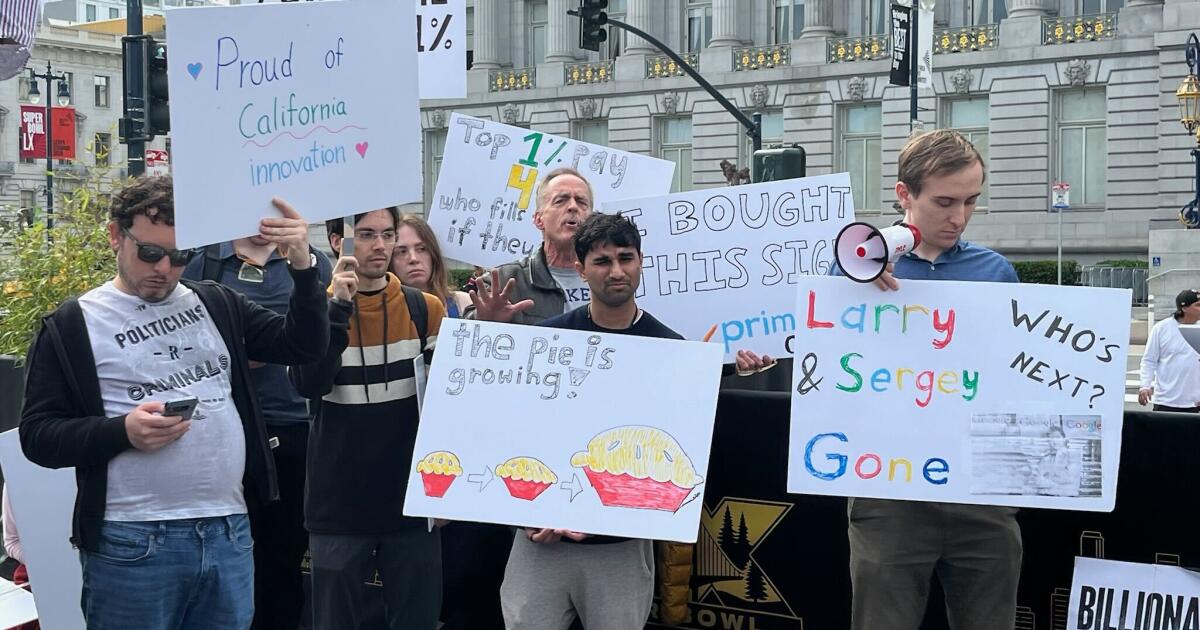
In San Francisco, a recent protest caught attention for its unusual focus: billionaires. About a dozen activists participated in the “March for Billionaires,” aiming to raise awareness about a proposed state tax on California’s wealthiest residents.
Organizer Derik Kauffman stated, “We should judge billionaires individually, just like everyone else.” His goal was to highlight that not all billionaires are the same. He argued that California thrives on the innovation and investment of its wealthy entrepreneurs.
The proposed Billionaire Tax Act would introduce a one-time, 5% tax on billionaires’ total wealth to help fund healthcare and food assistance programs. It aims to ensure that the ultra-rich contribute fairly to the state’s economy. Supporters believe this could greatly assist those in need. However, critics, including Governor Gavin Newsom, worry it might drive billionaires away, taking jobs with them.
Kauffman voiced these concerns, mentioning high-profile departures from the state. While Google still operates in California, some companies linked to its founders have moved elsewhere, like T-Rex Holdings. This ongoing trend highlights fears of financial flight—a common worry among states considering higher taxes.
The protest also drew some playful counterprotesters. One person wielded a puppet of the Swedish Chef, wearing an apron that read “Eat the Rich.” Another pair impersonated millionaires, expressing their exaggerated concerns about the proposed tax interfering with their luxurious lifestyles.
According to the Legislative Analyst’s Office, potential short-term gains from the tax might be outweighed by the loss of billionaires and the tax revenue they currently provide. Their analysis suggested that California’s rich might decide to relocate, resulting in significant losses for the state.
Interestingly, California currently boasts around 200 billionaires, their combined wealth reaching a staggering $2.2 trillion as of last year. Research from UC Berkeley found that billionaires pay a lower percentage of their incomes in taxes compared to the average American. From 2018 to 2020, they paid just 24% of their economic income in taxes, while regular Americans paid about 30%.
In a time where systems are under pressure, discussions about wealth and responsibility continue to evolve. As states navigate budgeting and social needs, this ongoing debate about taxation and wealth distribution remains relevant and critical.
