
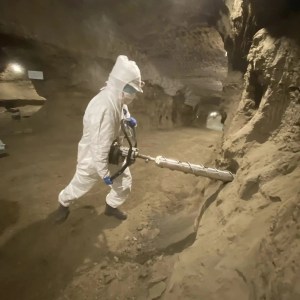
In a fascinating discovery, researchers from the U.S. Army Corps of Engineers found 26 new types of microbes in 40,000-year-old permafrost in Fox, Alaska. These tiny organisms might help develop new technologies for the military to function better in extreme cold.
Dr. Robyn Barbato, a senior microbiologist leading the project, described this discovery as enchanting. “It’s like finding hidden treasures,” she said. The microorganisms were revived in a laboratory after being kept frozen for thousands of years. This unique environment has shaped these microbes, enabling them to survive in sub-zero temperatures.
This research is part of a larger project called Ice Control for Cold Environments (ICE), which aims to unlock the secrets of these microbes. The hope is to create products that mirror their ability to endure extreme conditions, potentially leading to innovative solutions. For example, researchers are considering skin creams to prevent frostbite or special coatings to stop ice from forming on military vehicles.
Historically, the Permafrost Tunnel was built between 1963 and 1969 for military research. Today, it serves as a remarkable lab for studying frozen ecosystems. The findings here are vital, especially as climate change causes permafrost to thaw, releasing its ancient secrets.
Data shows that over half of the bacteria found in this tunnel are new species. Dr. Barbato believes that continuing research could reveal even more. “Every time we look, we discover something new,” she said, emphasizing the importance of exploring this microbiological frontier.
According to the latest statistics, the Army Corps has identified and cataloged a growing number of microbes from various cold regions, including the Arctic and Antarctica. This work not only broadens our understanding of microbial life but could also have practical applications beyond military use, such as in biotechnology and environmental monitoring.
The ongoing research underscores a thrilling reality: as we learn about these microscopic life forms, we may unlock new technologies that improve how we cope with extreme environments, offering solutions for both military and civilian contexts.
Source link
Army Corps of Engineers, Robyn Barbato, Cold Regions Research and Engineering Laboratory, Permafrost Tunnel, soil microbiology, FOX, Alaska, cold regions, permafrost, Defense Advanced Research Projects Agency, Cold Environments
