
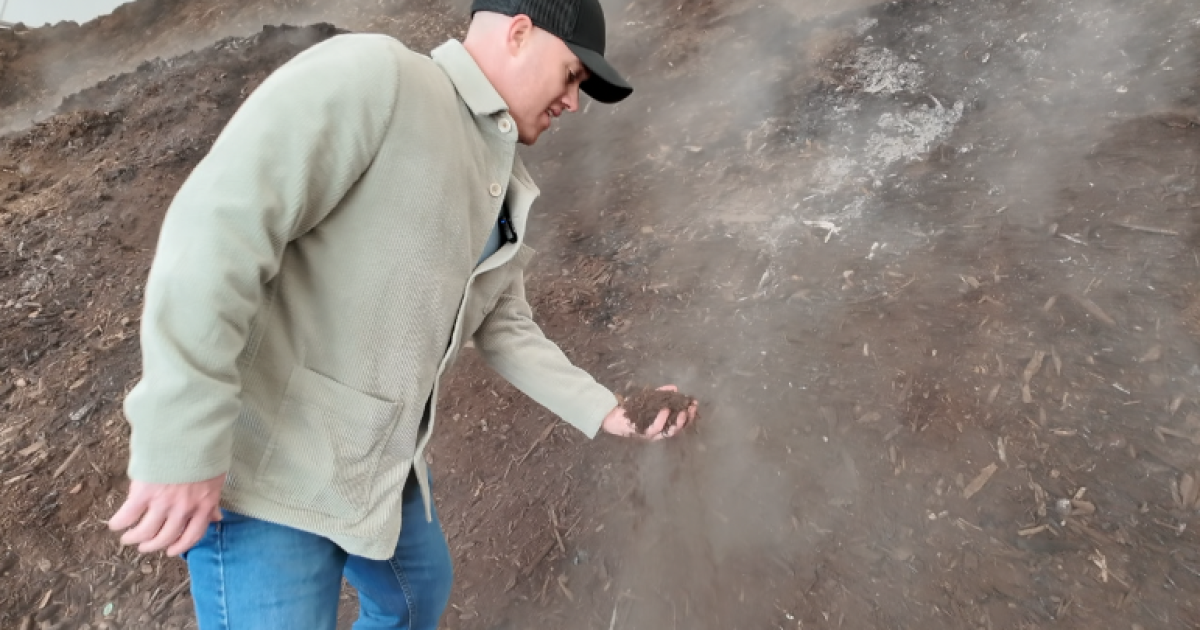
Morristown, Indiana, is leading the way in turning food waste into clean compost, even through winter. Caldwell’s Inc. is at the forefront of this green initiative, ensuring that food scraps are transformed into valuable compost all year round.
The team at Caldwell’s collects food waste from various sources, including grocery giants like Kroger and Walmart, restaurants, and schools. CEO Jordan Caldwell notes that many of these companies are driven by Environmental, Social, and Governance (ESG) goals, which encourage sustainable practices and better management of resources.
Once collected, the food waste is sorted and processed at their facility. This process begins with de-packaging, where food is separated from its packaging and the liquid waste is collected efficiently. Caldwell emphasizes that this operation runs 24/7, ensuring that the waste is processed quickly.
At the composting site, liquid food waste gets mixed with wood chips and manure, creating a rich environment for microbes to break down the organic matter. This is vital, as the decomposition process can produce heat that helps speed up composting. The ideal temperature for this range is between 130 and 160 degrees Fahrenheit, ensuring effective breakdown.
Interestingly, even during freezing temperatures, the facility doesn’t lose time. Caldwell mentions that the entire composting process usually takes about 90 days. Farmers like Andrew Fansler are seeing the benefits firsthand, noting that the fertility of their fields has greatly improved with the use of compost.
Fansler, who has farmed for over 30 years, points out the challenges farmers face today. Many have difficulty obtaining manure, as urban expansion has reduced livestock in the area. Compost is emerging as a viable alternative, but it’s not without its hurdles. The cost and effort to use compost effectively can be a barrier for many farmers.
“Fertility levels have been going up significantly,” Fansler states. Yet, he acknowledges that only a handful of farmers are currently utilizing compost due to economic strains in agriculture.
Caldwell estimates there are about a dozen composting facilities like his in Indiana, and hundreds across the nation. As sustainability becomes a growing priority, initiatives like these could play a crucial role in shaping the future of farming and waste management in America.
For more insights into sustainable agriculture and waste management strategies, you can explore reports from sources like the U.S. Department of Agriculture or findings from the EPA.
