
Cheating has a long history in the Olympics, dating back to the ancient games when offenders faced harsh penalties. The Milan-Cortina Games are no exception, though thankfully, no one has faced public flogging this time around.
These Games sparked controversy from the start. A German newspaper reported that ski jumpers were allegedly injecting hyaluronic acid into their bodies to enhance their performance. Then, there was a scandal involving Norwegian biathlete Sturla Holm Laegreid, who confessed to infidelity in a TV interview.
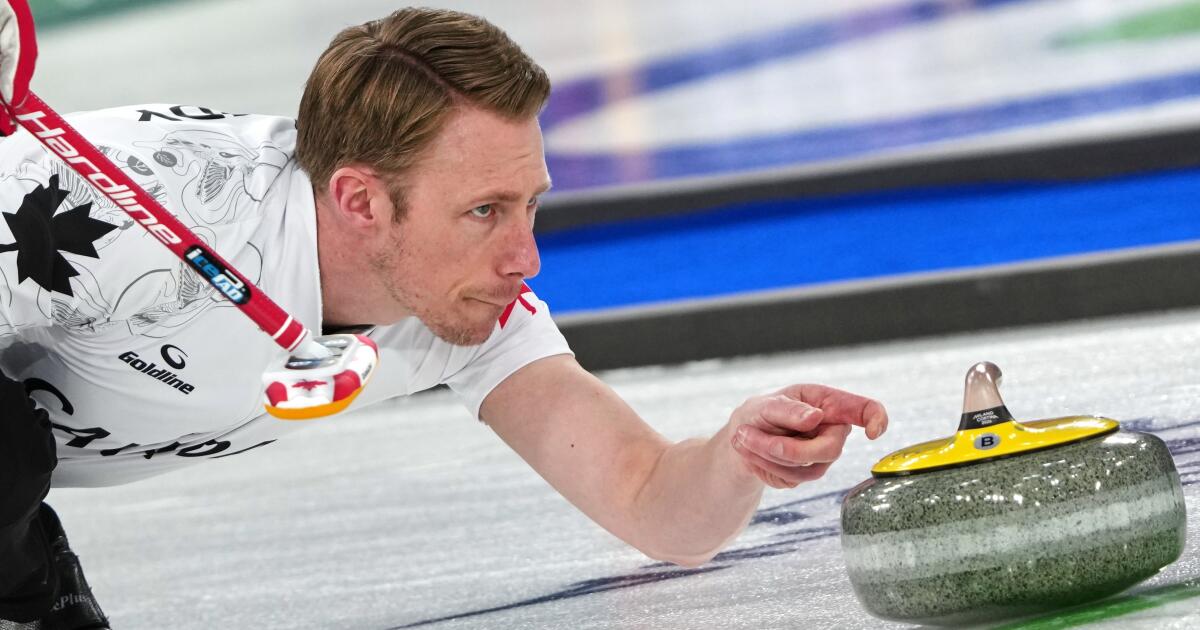
However, the most significant stir came when Canadian curlers faced accusations of bending the rules. This raised eyebrows and calls for increased oversight in a sport that has traditionally relied on athletes to judge their own actions.
Heather Mair, an expert on recreation and leisure studies at the University of Waterloo, notes that curling has a culture of trust. Players often compete against familiar faces in smaller circles. “Competition has a relational aspect,” she says, highlighting how camaraderie is part of curling’s ethos.
But the Olympics changed things. National pride and funding have made medals incredibly valuable, altering the game’s dynamics. Mair points out, “The context of the Olympics shifts everything.” As the curling world evolves, issues around cheating may intensify.
The Canadian teams were specifically criticized for double touching the stone during their releases. According to the rules, players can retouch their stones before the hog line, but not after. This became a hot topic when video showed Marc Kennedy allegedly touching the stone after he had released the handle, prompting scrutiny from officials.
Canadian skip Brad Jacobs expressed his frustration, stating, “As Canadian curlers, we were targeted.” The added focus on rules could feel suffocating, especially with new technologies being introduced. Modern curling stones now include hog-line sensors to check for late releases, but they can’t account for every touch or infraction.
Canadian coach Paul Webster pointed out that while the issue is serious, the rush to implement solutions at the Olympics may not be the best approach. “We have untrained people doing things they’ve never done before,” he remarked, emphasizing the stakes involved.
In these heated moments, Mair worries that trust—the core of curling—might be sacrificed. “This feels so ugly,” she says, emphasizing that the chase for medals may overshadow the spirit of the sport.
With Olympics bringing immense pressure, it’s clear that these moments will shape the future of curling—both at the elite level and in local communities. What happens in Milan-Cortina could change the face of curling forever.
As these Games unfold, the discussion around integrity and fairness is more relevant than ever.
Source link
