
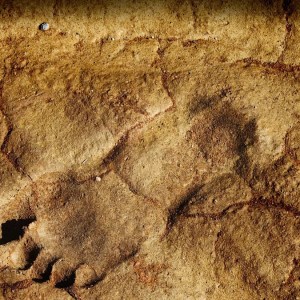
Studying ancient footprints in New Mexico gives us a peek into the earliest human movements in North America. Research shows these footprints are over 23,000 years old—10,000 years older than we thought. This discovery challenges previous beliefs and sheds light on early human life.
The footprints were found in White Sands National Park, a treasure trove of archaeological finds in New Mexico. Sally Reynolds, a paleoecologist at Bournemouth University, emphasizes how these footprints reveal how our ancestors lived, interacted, and navigated their environment.
Previously estimated to be around 13,000 years old, scientists used advanced methods like radiocarbon dating and pollen analysis in 2021 to revise the age. A more recent study, published in Science, reaffirmed this new dating by analyzing fossilized pine pollen in the same layers as the footprints. Matthew Bennett, a co-author of the study, expressed satisfaction with the findings, noting they enhance our understanding of ancestral movements and lifestyles.
The footprints tell stories. Some show children at play, while others hint at hunting scenes, like tracking down giant sloths or a woman carrying a child, possibly trying to escape a predator. These ancient tracks provide fascinating insights into daily life, from playfulness to survival.
In a Smithsonian article, Bennett pointed out predators like saber-toothed cats and dire wolves once roamed these lands, affecting how early humans lived. The varied footprints found suggest not just functionality in hunting but also moments of joy and interaction among different age groups.
While some footprints can be easily spotted, others require advanced technology like ground-penetrating radar to uncover. This mixture of visible and hidden prints enriches the narrative of human history 23,000 years ago.
Bennett hopes to discover more footprints, which could deepen our understanding of life in North America during that time. As we explore these ancient remnants, White Sands continues to offer insights that could reshape our knowledge of early human history.
Additional Insight:
Recent statistics show a growing interest in archaeology, particularly in the U.S. In 2022, archaeologists uncovered numerous sites, reflecting a national trend towards exploring indigenous history. As technology improves, studies like those at White Sands will likely yield more intriguing discoveries, revealing even more about our ancestors.
For those looking to explore the subject further, resources from the National Park Service offer a wealth of information on archaeological sites in America.
Source link
North American, Matthew Bennett, Bournemouth University, footprints, White Sands National Park
