
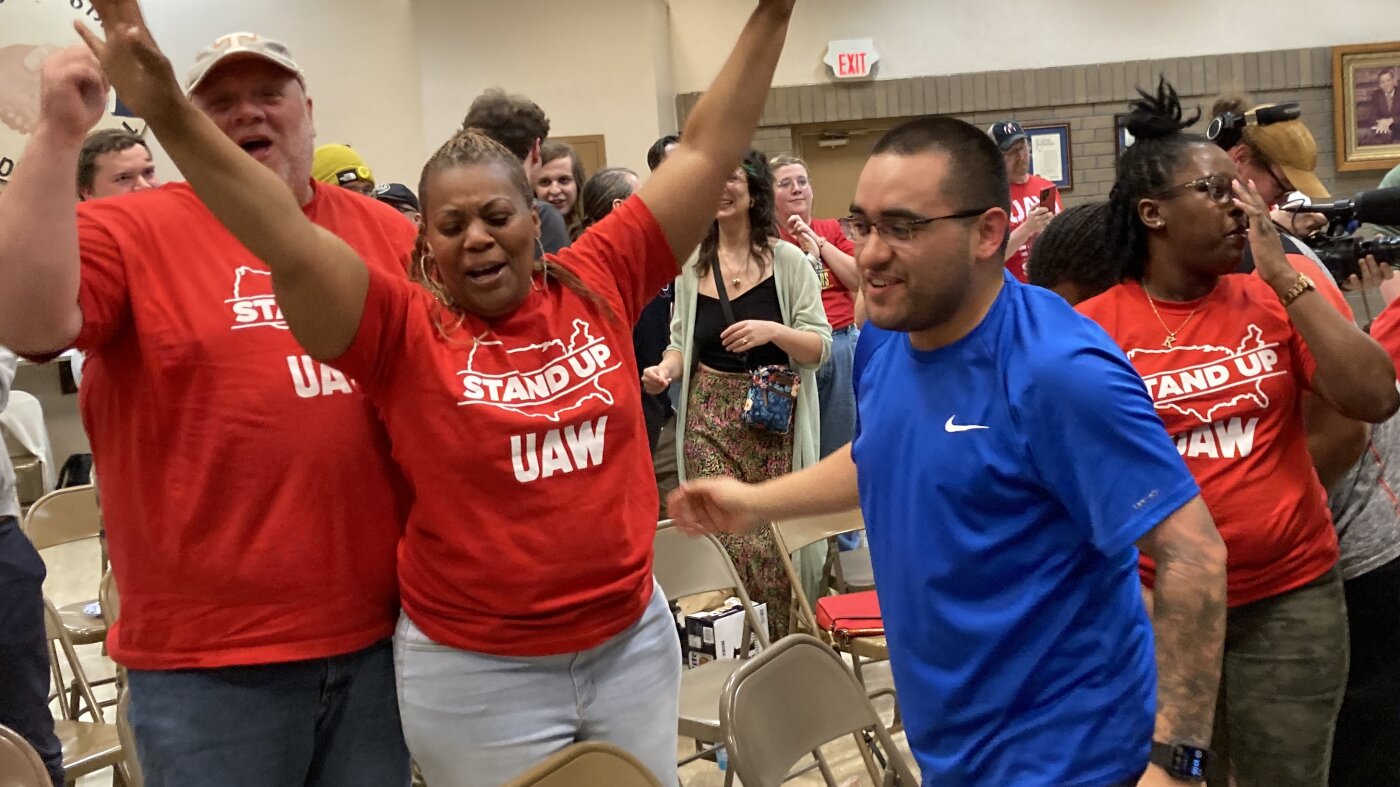
Volkswagen workers in Chattanooga, Tennessee, recently celebrated a significant milestone: they ratified their first union contract. This agreement brings pay increases, job security, and a much-needed win for the United Auto Workers (UAW) in the South.
The journey to this moment was not easy. Initially, workers rejected unionization, but in 2024, they flipped their decision. By voting in favor, they positioned their plant among the few Southern facilities to unionize, notably one outside the “Big 3” auto manufacturers (Ford, General Motors, and Stellantis). After nearly two years of negotiations, with one phase allowing for potential strikes, the UAW and Volkswagen reached a tentative deal that an overwhelming 96% of workers approved.
UAW President Shawn Fain addressed the assembly proudly, stating, “Today you showed the world Southern autoworkers are ready to fight.” He encouraged non-union workers elsewhere to join the movement, signaling a broader appeal.
Volkswagen also recognized the efforts of its staff, highlighting benefits that stemmed from the new agreement. Workers will receive a one-time bonus of $6,550 immediately, alongside a projected 20% wage increase over the contract’s duration, which lasts until February 2030. By the end of the contract, production workers will earn a top wage of $39.41 per hour, with skilled positions fetching even more.
Health care premiums will decrease by 20%, with no increases for four years. Workers will have an additional two days off and assured job security, as any potential layoffs must involve discussions with the union.
Tony Bodewes, a member of the bargaining committee, noted that the push for stronger job security was critical, stating, “It’s very important for us and for the company to show workers that they’re committed to this city.”
Tennessee is a “right to work” state, which means employees can choose whether to pay union dues. While dues are set at a minimum of 1.44% of monthly wages, many workers might opt out, making it vital for the UAW to demonstrate the tangible benefits of unionization to attract new members.
This victory offers hope for the UAW, which has struggled to achieve significant wins in the South. As automakers shift production to the region, driven by economic incentives and lower costs, the UAW sees an opportunity. The state’s past investments from foreign auto manufacturers like Nissan, Toyota, and Hyundai, have created a competitive labor market.
Steven Silvia, a labor expert, emphasized that this contract opens doors for the UAW, stating, “They gain momentum from this agreement. It gives them concrete examples to share with workers in other plants.”
The rise of unionization in Tennessee comes amidst changing dynamics. Recently, workers at a Mercedes plant in Alabama voted against unionization, signaling the ongoing challenges unions face in Southern states. While the UAW hopes to leverage the Chattanooga success, political shifts could pose further obstacles.
As Quinton North, a long-time Volkswagen team member, reflects on the new contract, he expresses contentment, yet looks for more improvements. “It’s a good pay increase,” he says, “but as a worker down there, you would always love to get a little bit more.”
This new contract might spark renewed interest in unionization elsewhere in the South, as the UAW aims to build on this momentum and champion workers’ rights in a rapidly evolving automotive landscape.
Source link
