
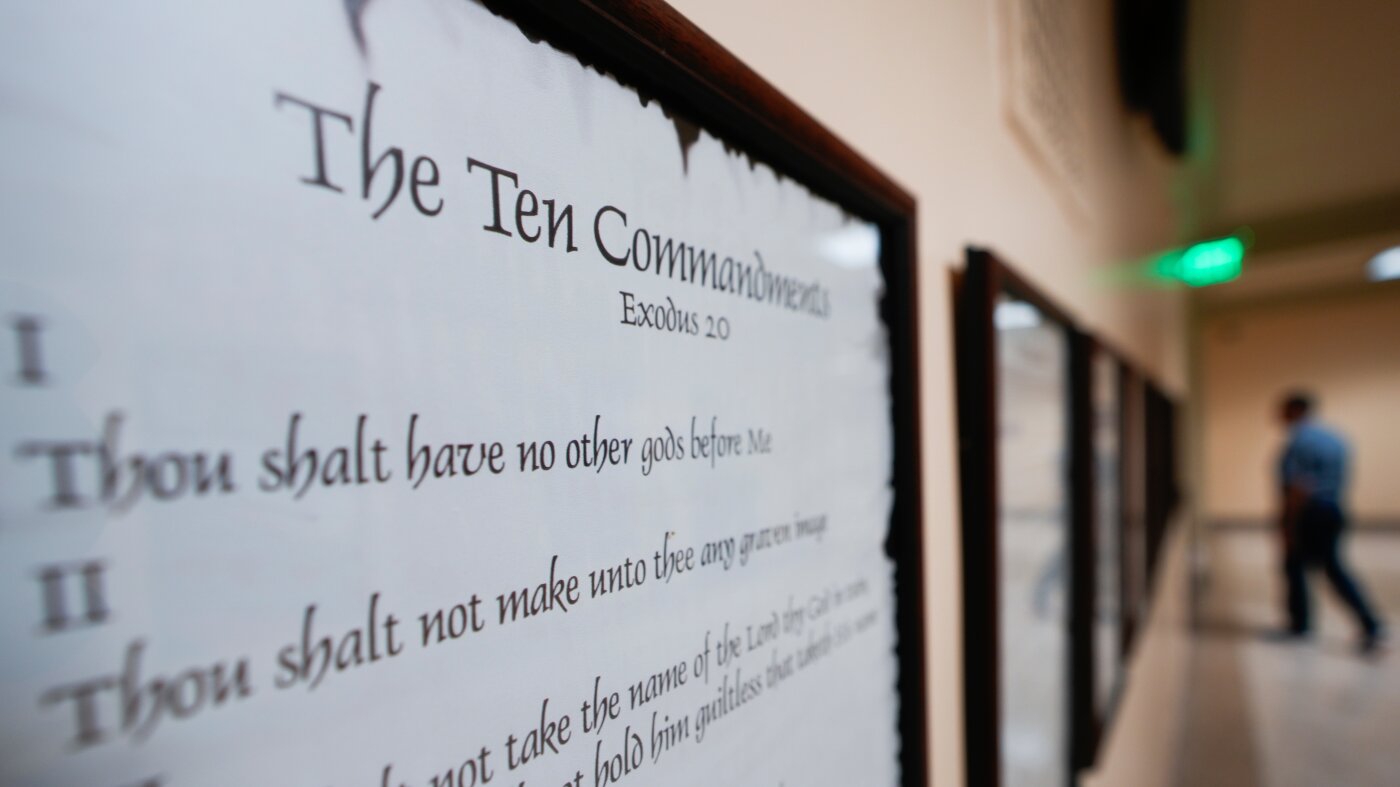
A U.S. appeals court has allowed a controversial Louisiana law that mandates poster-sized displays of the Ten Commandments in public school classrooms to take effect. The 5th U.S. Circuit Court of Appeals voted 12-6 to lift a previous block from a lower court. The court noted it was premature to decide whether the law is constitutional, mainly because important details are still unclear.
For instance, it’s uncertain how schools will display the religious text. Will teachers discuss the Ten Commandments in class? Will they include other documents like the Declaration of Independence? The judges stated they lacked enough information to assess any possible First Amendment issues, emphasizing the need for facts rather than speculation.
In a separate opinion, Judge James Ho, appointed by former President Donald Trump, praised the law as an affirmation of “our nation’s highest and most noble traditions.” However, dissenting judges argued that the law violates the separation of church and state, which the Framers of the Constitution sought to protect.
This ruling only came after the court chose to rehear the case, following a prior decision that deemed the law unconstitutional. The reversal reflects the court’s reputation as one of the more conservative appellate courts in the country.
Louisiana’s Republican Governor Jeff Landry celebrated the decision, claiming that “common sense is making a comeback.” Meanwhile, civil liberties groups like the ACLU of Louisiana plan to continue challenging the law through legal avenues.
The situation isn’t unique to Louisiana. Arkansas also has a similar law facing legal challenges, and a Texas law took effect recently, making it one of the most extensive efforts to display the Ten Commandments in public schools nationwide. Some districts in Texas faced federal injunctions against the law, yet many still managed to display the posters through donations.
These laws reflect broader Republican efforts to incorporate religious elements into public education. Critics argue that such initiatives violate the principle of separating church and state, while supporters claim they recognize the historical significance of the Ten Commandments as part of U.S. legal heritage.
Families from diverse religious backgrounds—Christian, Jewish, Hindu—and advocacy groups like the Freedom From Religion Foundation have pushed back against these laws, warning they complicate the legal landscape. Louisiana Attorney General Liz Murrill stated schools had received guidelines on displaying the mandated posters.
Historically, similar cases have reached the Supreme Court. In 1980, a Kentucky law requiring the display of the Ten Commandments was ruled unconstitutional for lacking any secular purpose. In more recent rulings, the Supreme Court addressed similar issues, reinforcing the divide between church and state.
Amidst all of this, the conversation about religion’s place in public schools continues to ignite debates, with social media reflecting both support and opposition to the legislative moves. As the legal battles unfold, the implications reach beyond Louisiana, resonating with discussions on educational frameworks across the nation.
For more insights, you can read about historical Supreme Court rulings on this topic at American Civil Liberties Union.
