
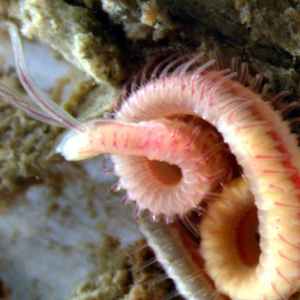
If you enjoy oysters, spotting a worm in your appetizer is quite off-putting, even though these little creatures are harmless to humans. A quick online search for “oyster worm” reveals many unpleasant images.
As a biologist, I study various invasive species, including mud blister worms. These worms may seem gross, but their lives offer fascinating insights. While they latch onto their hosts, they play a crucial role in our ecosystem.
What Are Mud Blister Worms?
Mud blister worms belong to a group called polychaetes, meaning “many bristles” in ancient Greek. These worms are known for boring into the shells of animals like oysters. Surprisingly, instead of consuming the shells, they create a network of tunnels, using the shell as a cozy home.
These worms stick their tentacles out of tiny holes in the shell to catch food particles from the water. Unlike many parasites, they do not directly harm their hosts. Instead, they rely on their hosts to deliver food.
How many of these worms can live in one shell? I once observed over 120 worms emerging from a heavily infested oyster. It was surprising to see them appear, almost like a scene from a horror movie!
Life Cycle and Feeding Habits
These worms are sedentary as adults, meaning they don’t leave their cozy tunnels. However, their larvae are free-swimming and disperse into the ocean. After mating, female worms produce thousands of eggs. Not all of them will hatch; some become “nurse eggs,” serving as food for developing larvae.
Interestingly, larger larvae sometimes resort to cannibalism, a behavior seen across the animal kingdom. For example, sand tiger sharks exhibit similar behavior, where siblings engage in deadly struggles even before they are born.
Impact on Humans and Aquaculture
The good news is that mud blister worms pose no threat to humans. Even if consumed, they won’t cause any harm—just unexpected extra protein! However, they are notorious pests in the aquaculture industry. Heavy infestations can stunt shellfish growth, as the oysters have to use energy for shell repair instead of growing.
Moreover, the meat of infested oysters is often described as having a “watery” texture, leading to financial losses for aquaculture farms. Various methods, like chemical treatments or heat-shocking, have been proposed to manage these worms, but a definitive solution remains elusive.
Ecological Role
Despite their reputation, parasitic species like these worms play significant roles in ecosystems. They help stabilize food webs and regulate populations. The larvae serve as essential food for many marine animals, contributing to the marine community’s overall structure.
So, the next time you enjoy oysters, take a moment to appreciate the hidden life within the shells. You might be surprised by what you find!
For more fascinating insights into the underwater world, check out this resource on shell-boring polychaetes.
This edition is designed to maintain clarity while providing engaging, unique insights. Let me know if you need further adjustments or additions!
Source link
segmented worms, worm infestation, the animal kingdom
