
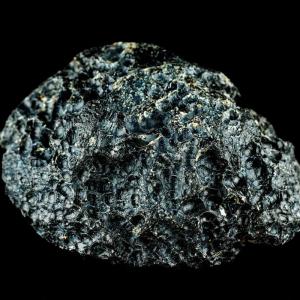
In a fascinating discovery, scientists have revealed that a meteorite impact occurred in northeastern Brazil about 6.3 million years ago. This is a big deal for geology, as it adds to the limited understanding we have of past impacts on Earth. An international research team uncovered a 900-kilometer-long area filled with tektites—rocks formed when intense heat from a collision causes terrestrial material to melt and then cool rapidly.
Historically, Earth has faced several significant impacts. For instance, the collision that created the Moon and the asteroid that wiped out the dinosaurs are well documented. However, smaller impacts often leave little trace. Unlike planets like Mercury or Mars, which preserve craters well, Earth’s surface is constantly changing. This makes it hard to spot scars from ancient impacts.
The newly identified tektites are called “geraisites,” named after Minas Gerais, the Brazilian state where they were found. Scientists estimate they’ve discovered around 600 pieces, weighing between 1 and 85.4 grams. These rocks, typically black, glow a translucent greenish-blue under light and have distinctive shapes like spheres and disks. They also contain tiny cavities, a sign of gas bubbles that escaped during their formation.
Álvaro Penteado Crósta, the lead author of the study, notes that the size of tektite fields depends on the energy of the impact. Although similar fields exist in places like Europe and North America, finding one in South America is significant. The study suggests the impact that created the geraisites likely occurred while Earth was in a different geological phase, involving ancient rock formations dating back billions of years.
Interestingly, the team has yet to identify the actual crater from this collision. About half of Earth’s known tektite fields don’t have accompanying craters, but researchers remain hopeful. Future studies using magnetic and gravimetric data may eventually uncover signs of the crater near the tektite field.
This discovery not only sheds light on Brazil’s geological past but also emphasizes the ongoing research in understanding how impacts have shaped our planet. As scientists continue to dig deeper, we may learn even more about Earth’s history.
For more on this topic, check out the research published in the journal Geology.
Source link
strewn field, impact crater, meteorite impact, international team, tektites, immense impact, South America, international team of scientists, impact
