
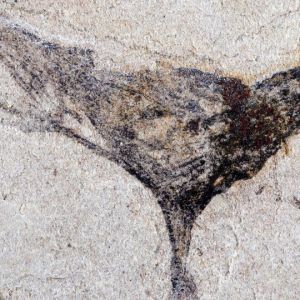
Newly discovered fossils in southwestern China are giving us a fresh perspective on life during the Ediacaran period, which lasted from 635 to 542 million years ago. These fossils, found at the Jiangchuan Biota site, show that complex animals may have existed much earlier than previously believed, potentially pushing back the timeline for essential evolutionary developments by up to four million years.
Previously, scientists linked complex life to the Cambrian explosion (542 to 488 million years ago) when a diverse range of species appeared. The Ediacaran period was thought to be a time of simpler organisms. But the recent findings suggest otherwise.
The new fossils are unique. For the first time, researchers found well-preserved body structures like feeding organs and limbs in these ancient creatures. They encapsulate what scientists have long theorized about the Ediacaran period but had not yet confirmed. According to study coauthor Ross Anderson from the University of Oxford, “We found what’s been long hoped for, which is a Cambrian-like preservation in the Ediacaran.”
The Jiangchuan Biota site is tiny, just about 518 square feet, yet it holds approximately 700 fossils, with around 200 representing different animals. Many of these fossils are remarkably small—less than an inch long—yet they showcase intricate anatomy.
A standout feature of many fossils is bilateral symmetry, a trait typical in modern animals. This finding suggests that the evolutionary foundation for many current life forms was laid much earlier than understood.
Some fossils hint at connections to deuterostomes, a category that includes vertebrates. Anderson commented, “It shows that our vertebrate ancestors were around at this pretty early stage in animal evolution. I think that’s really exciting.”
As researchers continue to study, they face the challenge of classifying extinct species based on limited fossil evidence. Jo Wolfe from Harvard University noted how difficult it can be to draw conclusions about extinct organisms when just a few traits are available for comparison.
Despite these challenges, the findings indicate that the evolution of complexity was already in motion before the Cambrian explosion. The Cambrian period remains unique due to an unprecedented explosion in species diversity, introducing groups like mollusks and arthropods, but it seems the groundwork was laid much earlier.
The implications are exciting. There’s still much more to discover about these ancient creatures, their lifestyles, and their environments. Understanding our evolutionary past not only fascinates scientists but may also reveal insights about life today.
Experts expect ongoing research to unveil new information about the ecology and behaviors of these early animals, potentially reshaping our understanding of life’s development on Earth.
Source link
Jiangchuan Biota, Cambrian explosion, China, Yunnan province, southwestern China, Ediacaran, Ross Anderson, animal groups
