
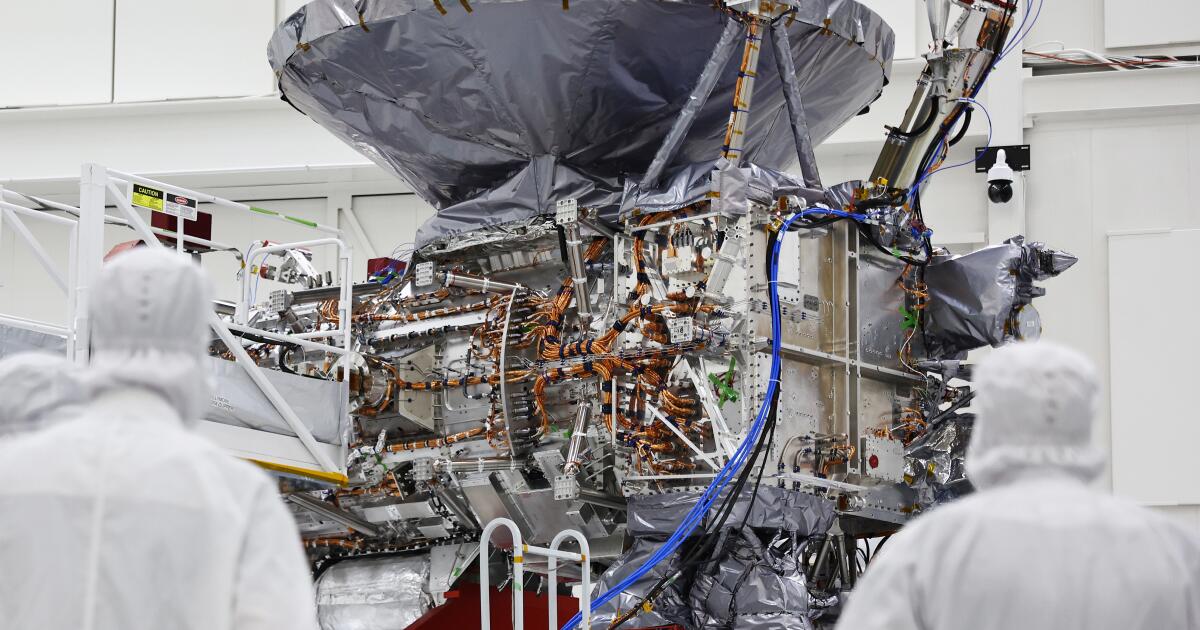
NASA recently made headlines with its Artemis II mission, marking the first crewed journey to the moon in decades. While this achievement is remarkable, concerns are rising about potential funding cuts for the agency’s scientific projects, especially under the Trump administration’s proposed budget for 2027. These cuts threaten not only NASA but also advancements made at the Jet Propulsion Laboratory (JPL), which is known for its groundbreaking work in space science.
The Trump administration’s budget request suggests a significant 23% cut overall, with a staggering 46% reduction specifically aimed at science programs. Such reductions would jeopardize numerous projects, including ongoing Mars missions and plans for exploring Venus. The Planetary Society, a nonprofit organization that advocates for space exploration, analyzed the proposed cuts and indicated that over 50 key science missions could be impacted.
Experts are voicing concerns over these proposed cuts. Casey Dreier, the Planetary Society’s chief of space policy, noted the lack of justification behind these reductions. He emphasized that the quality of scientific work at NASA has not declined, yet funding decisions seem disconnected from the agency’s achievements.
The funding debate has sparked a bipartisan response in Congress, where many lawmakers have pushed back against the proposed budget cuts. Senator Jerry Moran, who oversees NASA funding, stated his intention to advocate for similar funding levels to previous years, highlighting the mistake of undermining critical science missions. Representative Judy Chu echoed these concerns, emphasizing that the proposed cuts could result in further job losses and diminish America’s scientific expertise.
The proposed budget could lead to slower advancements in space science and further layoffs at JPL, an institution renowned for innovations such as the Mars rover Perseverance. Recent data shows that due to budget uncertainties, JPL has undergone multiple layoffs, forcing employees to seek additional funding sources from private companies. “If we’re not doing science, then what are we doing?” asked a former JPL employee, reflecting the apprehension within the lab.
Historically, NASA has faced funding challenges, especially during shifts in political leadership. For instance, last year’s calls for drastically reduced funding were met with strong resistance from Congress, which ultimately allocated $24.4 billion instead of the higher proposed cuts. This ongoing tug-of-war highlights the critical need for stable funding amid evolving political landscapes.
Engaging the public has also become essential. Many users on social media platforms have shared their support for NASA’s scientific missions, emphasizing the importance of knowledge and exploration over budget cuts. The successful Artemis II mission, in particular, has reignited public interest in space exploration, showing that there is a significant demand for continued investment in science.
Experts argue that both exploration, like the Artemis missions, and scientific investigations need resources. Roohi Dalal from the American Astronomical Society articulated that scaling back on science funding could compromise not just scientific advancements but also safety in missions like Artemis II.
As the budget process unfolds, it’s vital for Congress to prioritize funding for NASA’s science programs to maintain America’s leadership in space exploration. While the allure of moon missions captures the imagination, the groundwork provided by scientific research is what will ultimately sustain future discoveries.
Access to quality space science is key for understanding our universe and preparing for long-term missions. It’s time to recognize that investments in science and exploration must go hand in hand.
