
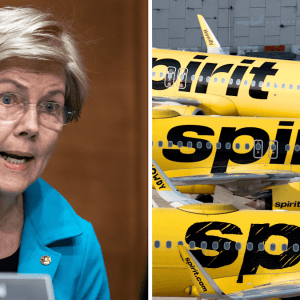
When Elizabeth Warren spoke on X about the blocked merger between JetBlue Airways and Spirit Airlines in early 2024, she framed it as a victory for consumers. She argued that stopping the merger would help keep fares down as it would maintain competition in the market.
But supporters of the merger had different views. They believed joining forces would help both airlines survive and manage costs, especially as Spirit struggled financially. Spirit’s CEO, Dave Davis, emphasized that the airline needed substantial funding to keep operating but simply couldn’t secure it. He expressed disappointment over the situation, which ultimately led to Spirit shutting down after over three decades of service.
This shutdown raises a key question: Was blocking the merger the right choice?
The JetBlue-Spirit merger plan began in 2022 when JetBlue proposed acquiring Spirit for $3.8 billion. This would have merged the two airlines into the fifth-largest carrier in the U.S. JetBlue’s former CEO stated that the merger aimed to create a powerful competitor to the major airlines, working to lower fares overall.
For Spirit, known for its ultra-low-cost services, the merger was seen as a critical opportunity for survival. The airline was experiencing challenges from rising costs and a shift in demand. By mid-2024, both airlines acknowledged that they could not meet the necessary legal and regulatory requirements to complete the merger and decided to terminate the agreement.
Although JetBlue claimed this merger could have provided better prices for travelers, critics like Warren feared it might lead to higher costs and fewer flights. After the merger’s failure, Warren reiterated her concerns on social media, stating she had long warned that the merger would worsen air travel for consumers.
Spirit Airlines had long been known for its low fares, which forced larger airlines to keep their prices lower. Now that Spirit has exited the market, some experts predict that the competitive landscape could change significantly. Instead of a consolidation that might have resulted in modest fare increases, the airline industry could now face reduced competition overall, especially on routes where Spirit offered low prices.
Warren, meanwhile, pointed to the rising fuel costs, driven partly by global events, as a major factor in Spirit’s collapse. Her criticism of the merger blocking reflects broader concerns about corporate consolidation in the airline industry. These concerns are not new; they echo a long history of antitrust debates aimed at protecting consumers.
As of now, major airlines are responding to Spirit’s closure by limiting ticket prices on routes where Spirit used to operate, hoping to retain market interest and alleviate consumer concerns about rising fares. This adaptive strategy indicates that the airline industry is keenly aware of the impact Spirit had on pricing dynamics, even after its exit.
The situation showcases the challenges in forecasting market behavior. Blocking the merger might have seemed like the right decision at the time, but its consequences reveal much about the complexity of the airline industry today.
Source link
Spirit Airlines, JetBlue Airways, Elizabeth Warren, Chief Executive Officer, The Spirit, definitive merger agreement
