
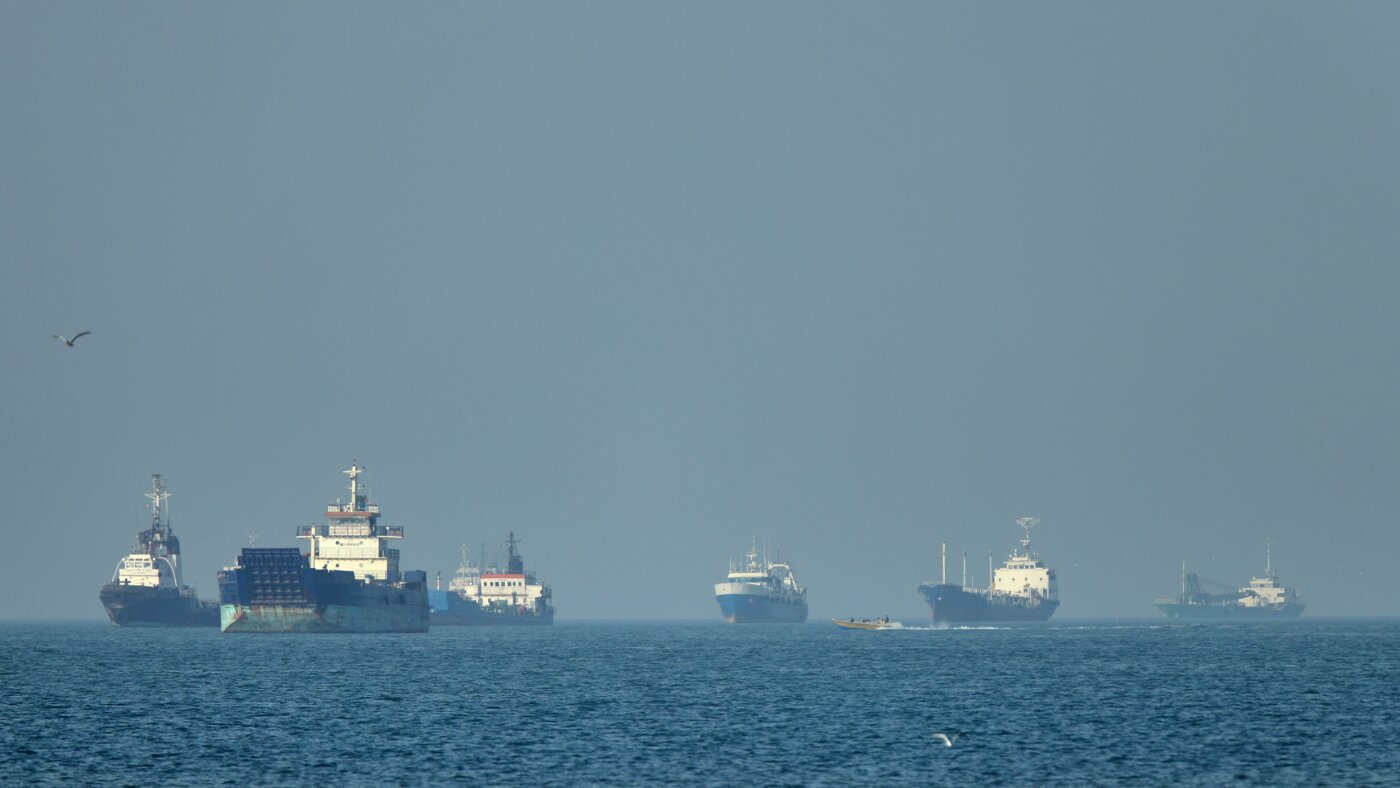
The situation in the Strait of Hormuz is tense and getting more complicated. Recently, the United Arab Emirates (UAE) reported that it successfully intercepted Iranian missiles and drones. This comes after a series of aggressive acts that have put a shaky ceasefire at risk.
The UAE’s Defense Ministry stated that three people were injured when their defense systems engaged two ballistic missiles and three drones launched by Iran. It’s unclear how many of these attacks were successfully intercepted, but the authorities are advising people to stay away from any debris.
On the U.S. side, military actions have intensified. The U.S. claimed it deterred attacks on three Navy ships and also targeted Iranian military sites in the strait. This escalation followed a significant increase in fuel prices globally due to ongoing conflicts in the region, highlighting the strategic importance of this waterway.
President Joe Biden’s administration has echoed these rising tensions, while experts warn that military conflicts in the Strait could lead to severe repercussions for global markets. A recent survey indicated that over 70% of Americans are concerned about the potential for a military confrontation impacting oil prices.
Amir Khorgooi, an international relations expert, commented that “the stakes are now higher than ever.” He emphasizes that the Strait of Hormuz is a critical route for about 20% of the world’s oil supply. Its disruptions could lead to catastrophic financial instability, reminiscent of past oil crises.
Iran’s military forces stated that they exchanged fire with what they called “the enemy” on Qeshm Island, signaling an upswing in hostilities. Iranian state media reported loud defensive sounds late Thursday, indicating heightened military readiness.
Adding fuel to the fire, Iran announced the creation of the Persian Gulf Strait Authority, designed to regulate and tax ships passing through the strait. This move has sparked international concern, as it could disrupt maritime law, which generally allows for peaceful passage through territorial waters. Experts argue this action may violate the United Nations Convention on the Law of the Sea.
As the U.S. and its allies push for a resolution against Iran’s actions, the situation continues to evolve rapidly. The international community is watching closely, hoping for a peaceful resolution. Meanwhile, the ramifications of any military engagement could reshape global energy dynamics for years to come.
In sum, the Strait of Hormuz remains a flashpoint in international relations, characterized by military tension and economic vulnerability. The world waits anxiously to see how this delicate situation will unfold.
