
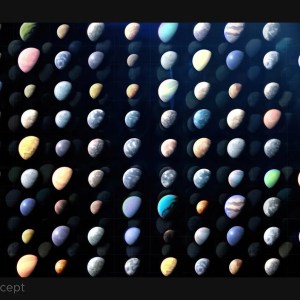
Researchers have recently uncovered evidence of over 10,000 new planets, called exoplanets, orbiting stars outside our solar system. This is exciting because, up until now, we only had confirmation of just over 6,000 exoplanets.
Using advanced techniques, including artificial intelligence, a team of scientists has made a remarkable discovery. If their findings are confirmed, it could more than double our current count of exoplanets—an important step in the search for life beyond Earth.
NASA is gearing up for the launch of the Nancy Grace Roman Space Telescope in 2026, which could identify even more new worlds. This telescope is expected to play a pivotal role in future discoveries.
Understanding Exoplanets
Exoplanets are essentially planets that exist outside our solar system. They can be similar to Earth in some ways, but they also come in many forms—from rocky worlds to massive gas giants. Interestingly, some planets, known as rogue planets, drift through space without orbiting any star.
Statistics on Exoplanets
As of now, NASA has confirmed 6,286 exoplanets. Research shows that there are nearly 8,000 candidates waiting for further study, and astronomers estimate that billions more could exist throughout the universe.
The recent discovery of over 10,000 potential new exoplanets came from data collected by NASA’s Transiting Exoplanet Survey Satellite (TESS). Researchers applied a machine learning method on historical data to identify these new candidates. They expanded their search to include fainter stars and came up with 10,091 planet candidates that had gone unnoticed before.
Why Finding Exoplanets Matters
Since the discovery of the first exoplanet in 1995, scientists have been eager to find worlds that could support life. A breakthrough would come if we found an Earth-like planet. Recently, an exoplanet named K2-18b gained attention for potentially having conditions that could support life, but subsequent studies have raised questions about those claims.
Understanding exoplanets is vital not just for finding life but also for grasping our own planet’s uniqueness and place in the universe.
The Search for Life in Our Solar System
While we search distant exoplanets, our solar system offers other exciting possibilities for life. Mars, for example, shows signs of having once supported life. Additionally, moons like Europa and Enceladus are key targets for exploration due to their potential for harboring life. NASA’s planned missions aim to investigate the icy surfaces of these moons by the next decade.
The hunt for life beyond Earth continues to captivate scientists, making the discoveries of new exoplanets even more significant. As technology evolves, so does our understanding of what lies beyond our planet.
For more in-depth information on exoplanets and ongoing space missions, you can visit NASA’s dedicated page on them at NASA Exoplanets.
Source link
solar system, exoplanets, NASA, researchers
