
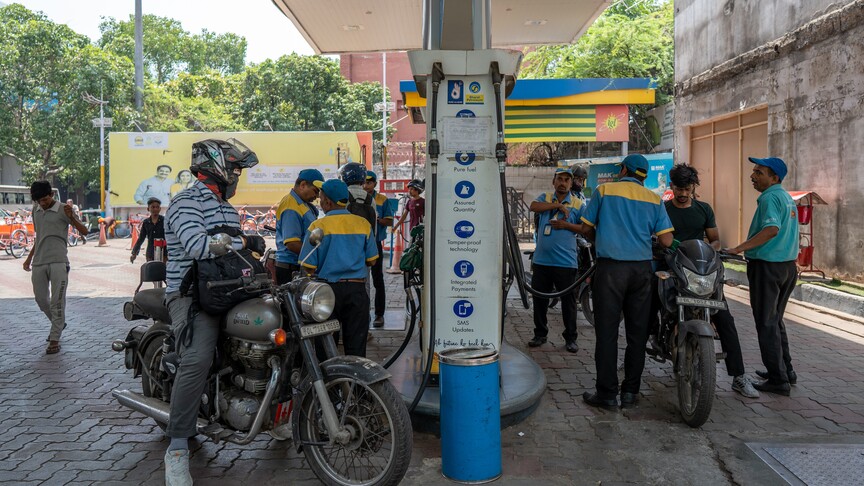
Rising crude oil prices due to tensions in the Middle East are causing fuel prices to spike in South and Southeast Asia. India and Cambodia have both increased petrol and diesel prices recently, driven by inflation and mounting financial pressures on state-run oil companies.
In India, petrol and diesel prices rose again this week. State-run firms raised prices by about 90 paisa per liter (roughly 1 cent). This increase follows a 3 rupee per liter hike just five days ago, marking the first significant rise in over four years. Now, petrol in Delhi costs 98.64 rupees per liter ($1.18), while in Mumbai and Bengaluru, it has crossed 107 rupees per liter ($1.28). Diesel prices have also surged to around 91.58 rupees ($1.10).
Officials attribute these hikes to higher international crude prices and increased losses on domestic sales. Major companies like Indian Oil and Bharat Petroleum absorbed heavy losses by keeping retail prices steady despite rising import costs. Estimates suggest these companies lost over $120 million daily before the latest price adjustments.
In Cambodia, fuel costs have also climbed in response to erratic global energy markets. Regular gasoline prices went up from about $1.28 to $1.35 per liter, and diesel rose from roughly $1.13 to $1.15. Cambodian authorities noted this increase reflects the growing concerns over disruptions in crude supply due to the Middle East conflicts.
Cambodia is particularly vulnerable to these fluctuations since it imports nearly all its fuel. This reliance makes domestic prices highly sensitive to changes in global markets.
The conflict in the Middle East has historical roots, affecting global oil supplies for decades. Recently, tensions have escalated around the Strait of Hormuz, a critical shipping route for oil. According to the U.S. Energy Information Administration, about 20% of the world’s oil passes through this strait, making it a focal point for energy security.
In social media discussions, users express frustration over the hike, with many sharing their thoughts on how rising fuel costs impact daily life and the economy. This trend reflects a broader concern over inflation as fuel prices influence everything from food costs to transportation.
As fuel prices climb, individuals and businesses alike are feeling the squeeze. Keeping an eye on these trends is crucial, as even small changes can lead to significant challenges in daily expenses.
For more on global energy trends, you can check the U.S. Energy Information Administration’s reports here.
Source link
SiteKeywords
