
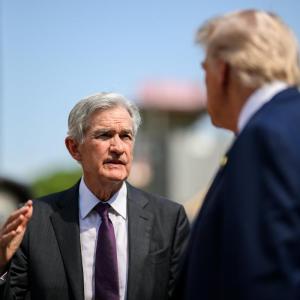
This year has been quite a ride in the financial world. Major indexes like the Dow Jones, S&P 500, and Nasdaq have hit record highs. We also saw a significant change in leadership at the Federal Reserve. Jerome Powell finished his term as Fed chair, paving the way for Kevin Warsh, nominated by President Trump. Warsh is now the 17th person to hold this position since the Fed was established in 1913.
Warsh’s arrival brings a different vibe than Powell’s tenure. While Powell and Trump often clashed, expectations are that Warsh might maintain a more cooperative relationship with the President. However, both share similar views on monetary policy, which might lead to some tension down the line.
During Powell’s final year, he resisted Trump’s calls for aggressively lowering interest rates. The Fed had already cut rates six times between September 2024 and December 2025, bringing them down to between 3.5% and 3.75%. Trump had been pushing for rates to fall to 1%, arguing that lower rates could boost job growth and innovation, and help manage the national debt, which stands at about $39 trillion.
Powell often indicated that economic indicators, not political pressure, would determine monetary policy. He pointed to external factors, like trade tariffs and energy supply issues, as reasons for elevated inflation rates. In fact, inflation has been climbing recently, driven partly by geopolitical tensions in the region.
Warsh, known for his cautious approach on interest rates, could lengthen the time before any significant cuts occur. His past leanings suggest he would rather keep rates higher to combat inflation. Recent statistics show inflation has been rising quickly, with rates climbing from 2.4% to 3.8% between February and April. It’s projected to reach around 4.18% by May, the highest level since last year.
Historically, Warsh has acted as a monetary hawk. During his previous tenure at the Fed from 2006 to 2011, he frequently advocated for higher interest rates to keep inflation in check, even during times of high unemployment. This focus on managing inflation may lead to conflicts with Trump, who remains focused on stimulating the economy.
The implications of these potential disagreements are significant. If Warsh pushes for tighter monetary policies, it might cool off the stock market’s current rally. With rising inflation and Warsh’s stringent policies, Wall Street could face a testing period ahead.
As a result, if the conflict between Trump and Warsh heats up, it will be crucial to keep an eye on market reactions. Past trends indicate that political tensions often translate into market volatility, and this time may be no different. In summary, keep your strategies flexible and informed as we navigate this unpredictable economic landscape!
Source link
Kevin Warsh, Donald Trump, Jerome Powell, interest rates, the Federal Reserve, monetary policy
