
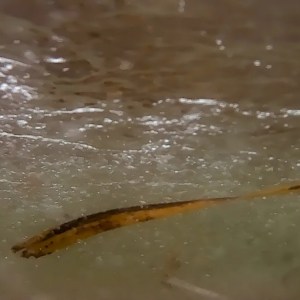
Scientists recently made a fascinating discovery in Siberia’s permafrost: they revived a tiny, 24,000-year-old rotifer. This little creature was found frozen since the Late Pleistocene and was brought back to life in a lab, moving and even reproducing like it had never been frozen.
This discovery is important. Lead researcher Stas Malavin noted it provides solid evidence that multicellular animals can survive extreme conditions through a process called cryptobiosis. In cryptobiosis, an organism’s metabolism essentially halts, allowing it to endure freezing temperatures for millennia.
Past revivals have mostly involved simple, single-celled organisms, making this achievement notable. Typically, the more complex an organism is, the harder it is to freeze without damage. Reviving more complex life forms could open up new possibilities for cryopreservation, even though it’s a challenging field. Experts are still figuring out how to safely freeze and revive more complex organisms, as seen in sci-fi stories.
Interestingly, while some ancient microbes can come back to life easily, they don’t always pose a risk to humans—at least, not yet. As climate change causes permafrost to thaw, there’s a growing concern about the potential revival of ancient viruses that might be harmful.
Living in 2026 is quite an achievement for something born when mammoths roamed the Earth. This miraculous survival raises questions about what else might still be hidden in the icy depths of our planet.
For more details on this study, you can read the full analysis published in the journal Current Biology.
Source link
microscopic organism, multicellular animals, Indian Defence, cryopreservation, Living organisms, permafrost
