
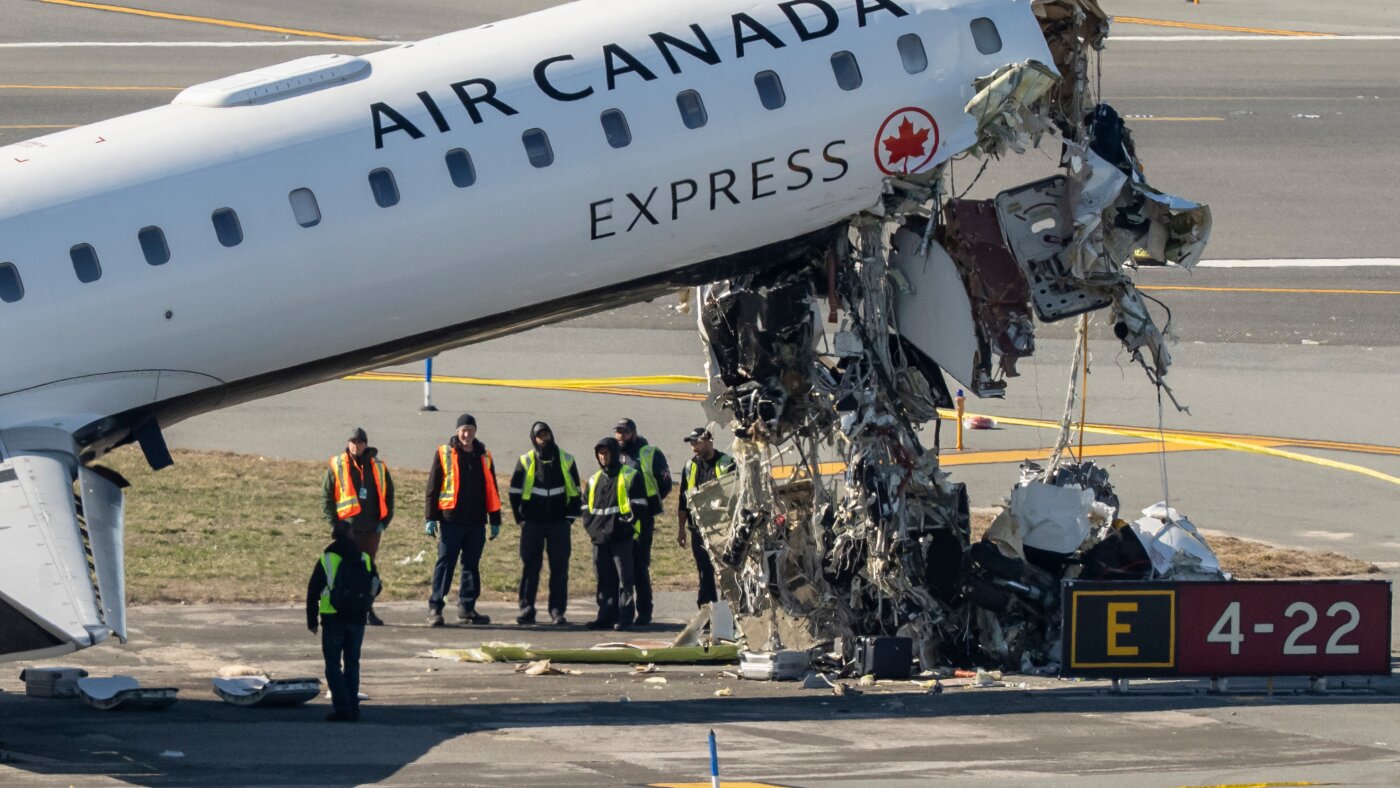
On March 24, 2026, an Air Canada Express jet tragically collided with a Port Authority fire truck on the runway at LaGuardia Airport. This incident led to the deaths of two pilots and has raised serious questions about air traffic safety.
The National Transportation Safety Board (NTSB) is currently investigating the crash. NTSB chair Jennifer Homendy emphasized that the focus isn’t on blaming individual controllers but addressing broader systemic issues. She expressed concern that two controllers may have been handling multiple roles at once during a crucial shift.
Homendy noted that during late-night shifts, it’s common for controllers to juggle several responsibilities due to staffing levels. At LaGuardia, which is notoriously busy, she questioned whether this practice is appropriate. “We need to scrutinize if this makes sense for LaGuardia,” she said.
Both controllers on duty that night had critical roles: one was managing the runway, while the other also handled clearance for departing flights. Complicating matters, the controller in charge was also overseeing ground operations, which is unusual.
Fatigue on night shifts is a concern in the aviation industry. Although the NTSB has no evidence that fatigue played a role in this incident, it’s an issue that deserves attention. Transport Secretary Sean Duffy mentioned that there are typically around 37 controllers needed at LaGuardia; currently, there are 33, with several in training.
The NTSB recovered the cockpit voice recorder, which contains vital information from the incident. In the last few moments before landing, the crew had completed their landing checklist. A fire truck asked for clearance to cross the runway, but this request coincided with communication from the aircraft. It appears that the truck, not equipped with a transponder, went unnoticed by controllers.
Homendy highlighted the limitations of the Airport Surface Detection System (ASDE-X), which failed to alert controllers during this critical moment. The technology couldn’t track the fire truck accurately, contributing to the confusion.
Despite gathering significant information, the NTSB still has many unanswered questions. They are looking into who made the interrupted radio transmission and whether the fire truck crew received the stop order. The investigation aims to establish whether the pilots saw the truck and if there was any confusion in the cockpit.
Homendy made a poignant observation: “It’s rare for a major accident to result from a single failure.” The aviation system has layers of safety protocols, and lapses in multiple areas often lead to such tragic outcomes.
This incident has sparked discussions on social media about air traffic safety and the pressures faced by controllers. Many users are sharing personal experiences with the aviation industry, expressing their concerns about safety in crowded airports.
For more information on aviation safety, you can visit the NTSB’s official site.
