
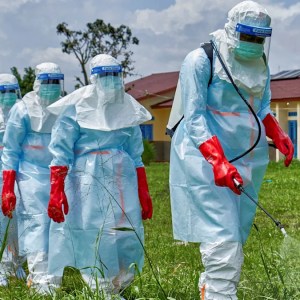
The Africa Centres for Disease Control and Prevention has issued a serious warning about an Ebola outbreak affecting parts of the Democratic Republic of Congo (DRC) and Uganda. Director General Jean Kaseya identified ten countries at risk: Angola, Burundi, Central African Republic, Republic of Congo, Ethiopia, Kenya, Rwanda, South Sudan, Tanzania, and Zambia. To tackle this crisis, Africa CDC and the World Health Organization (WHO) are seeking over $314 million in emergency funding.
Recently, the WHO heightened its risk assessment for DRC to “very high,” reporting nearly 750 suspected cases and 177 deaths. In Uganda, five Ebola cases have been confirmed among individuals who traveled from DRC, including a Ugandan health worker and a Congolese woman who sought care in Kampala.
The U.S. has committed $23 million to assist with the outbreak response. WHO Director-General Tedros Adhanom Ghebreyesus expressed deep concern about the outbreak’s rapid spread and declared it a public health emergency. In response, the U.S. Centers for Disease Control and Prevention (CDC) has banned travel to the U.S. for non-citizens who have been in DRC, South Sudan, or Uganda recently.
One notable case is that of Peter Stafford, an American doctor working in DRC who tested positive for Ebola. He has since been transported to Germany for treatment. His wife and four children, who show no symptoms, are in quarantine as a precaution.
This crisis highlights a troubling trend. Since 1976, the DRC has faced multiple Ebola outbreaks. Recent statistics show that while the disease is becoming less common globally, the risk remains high in certain regions. In fact, according to the WHO, the DRC has had over 11 outbreaks reported in the last decade alone. Understanding travel history is vital to controlling the spread, which is why health officials are closely monitoring movements in and out of affected countries.
The rise of social media has also played a role in shaping public reactions. Many users are sharing news and their thoughts on platforms like Twitter, raising awareness and pushing for improved safety measures. As people connect online, the urgency of the situation becomes clearer, promoting community responses to support those affected.
Staying informed is crucial. The ongoing response efforts and the gathering of resources will determine how effectively this outbreak can be contained. Let’s keep a close eye on the latest developments and support the health organizations working tirelessly to combat this outbreak.
Source link
Uganda, Africa, Ebola outbreak, Central African Republic, Africa, Democratic Republic of Congo, Disease Control and Prevention, Peter Stafford, World Health Organization, public health emergency, CDC
