
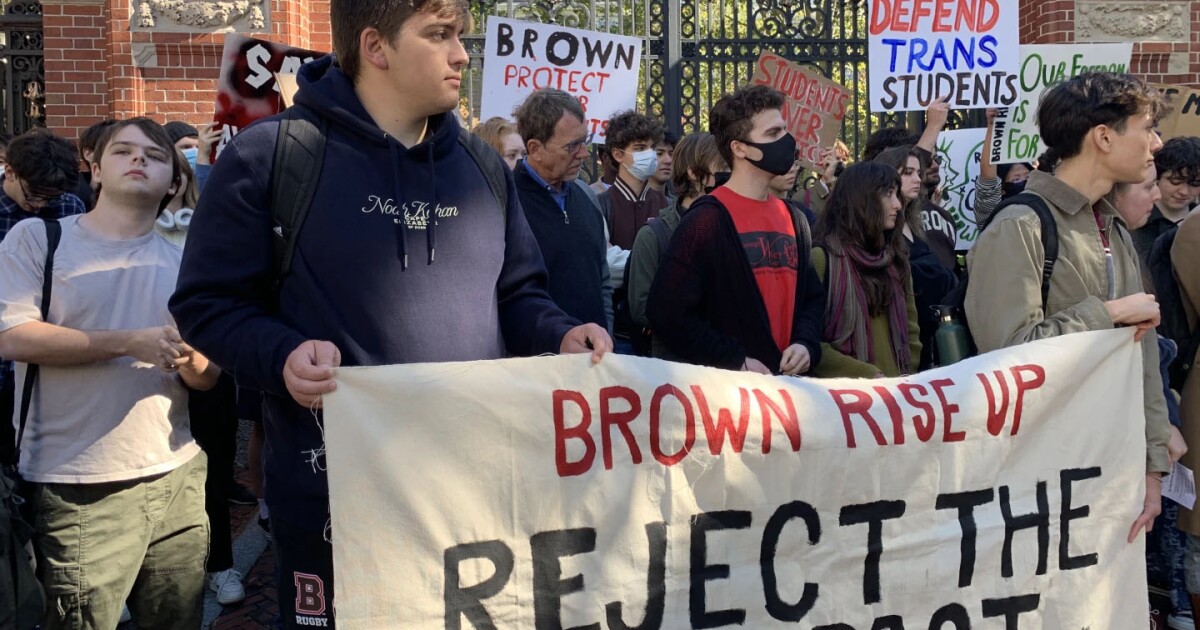
Brown University has turned down a proposal from the Trump administration regarding new terms for federal funding. In a letter to federal officials, President Christina H. Paxson expressed concerns that the proposed “Compact for Excellence in Higher Education” would limit academic freedom and harm the university’s governance.
The compact, introduced on October 1, offers funding incentives in exchange for significant compromises from Brown. Key demands include freezing tuition for five years, capping international undergraduate enrollment at 15%, eliminating grade inflation, making standardized tests like the SAT mandatory, and prohibiting race as a factor in admissions and hiring. The administration also called for strict policies against actions on campus that could harm conservative viewpoints.
Brown is one of nine universities invited to participate, with other schools including MIT, which was the first to reject the proposal. MIT President Sally Kornbluth stated that the university’s existing commitments to education and free speech already exceed the standards set by the compact.
Paxson’s letter echoed Kornbluth’s sentiments, noting that Brown had already signed a different agreement with the administration earlier in the year. The ACLU of Rhode Island supported Brown’s decision, emphasizing its importance for education across the United States.
While the White House has not yet responded directly to Brown’s rejection, a spokesperson mentioned that President Trump remains focused on enhancing academic excellence in higher education.
The debate surrounding this compact reflects broader trends in university governance and funding. A recent survey showed that 75% of college administrators are increasingly worried about political pressures affecting their institutions. This growing concern raises questions about the balance between governmental influence and the independence of educational bodies.
In contrast, historical context reveals that tensions between universities and government have existed for decades. In the 1960s, many universities faced similar challenges when addressing free speech on campus. As the debate continues, institutions like Brown and MIT emphasize the importance of maintaining academic freedom and a culture of open dialogue.
For more information, you can read the full letter from Brown and learn more about the compact itself in this Washington Examiner report.
