
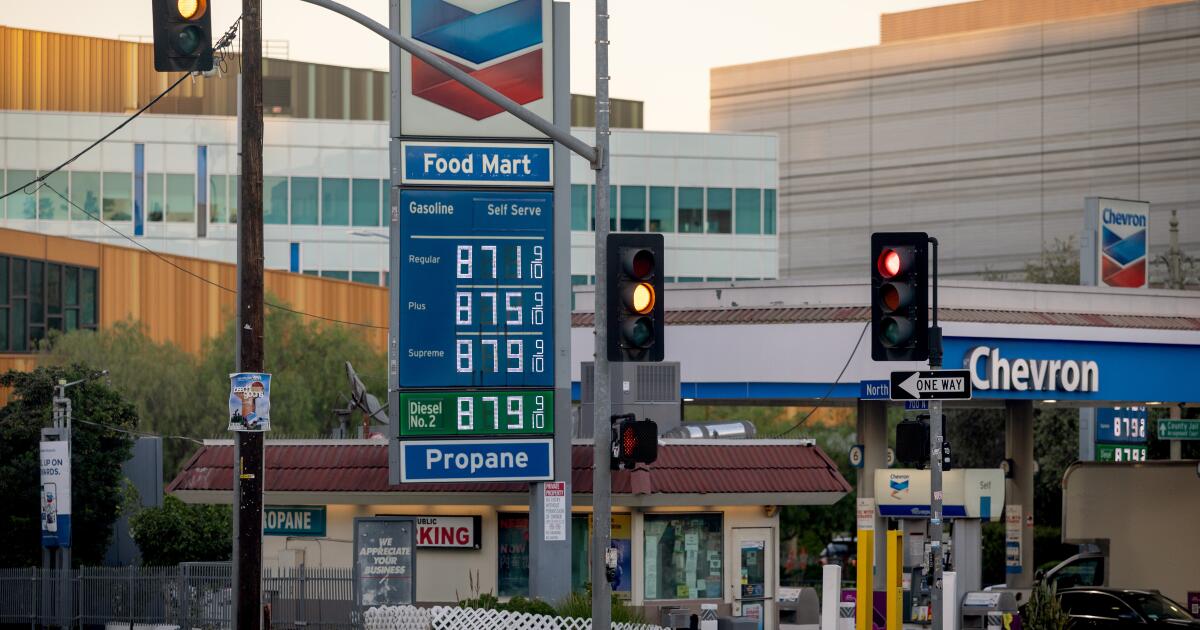
California’s gas prices are soaring, and some stations are charging over $9 per gallon. This spike comes amid geopolitical tensions, particularly the conflict involving Iran, which has disrupted oil supplies and sent prices higher.
Currently, the average gas price sits at $5.66, but some places are charging exorbitant amounts. For instance, a Chevron station in Essex is listing prices at $9.69 and another in Los Angeles’ Chinatown at $8.71. This situation has caught the attention of the California Energy Commission. Tai Milder, who oversees petroleum market operations, assures that they are closely monitoring the market for any unfair practices.
Nationally, gas prices have surged about 30% due to recent military actions linked to Iran. Californians are feeling this pinch even more, as they consistently pay at least $1 more per gallon than the national average.
Experts indicate that these high prices don’t match current crude oil costs. Historical trends show that California has struggled with high fuel prices for years. The state’s complex laws and environmental regulations, alongside limited in-state refineries, make it particularly susceptible to price increases, especially when supplies are disrupted.
In 2023, California established the petroleum oversight division to address these ongoing issues after repeated price spikes. It aims to keep tabs on market practices and prevent price gouging. Notably, after analyzing data, the division revealed that Californians pay an extra 41 cents per gallon even after accounting for taxes and regulations, with much of it unexpectedly going towards refinery profits.
Consumer Watchdog, a nonprofit advocacy group, argues that the widening price gap is a clear sign of price gouging. Jamie Court, its president, notes that refinery margins have jumped from 49 cents to $1.25 per gallon since the conflict began. Yet, Chevron states that station owners set prices based on local economic conditions, which can often lead to higher costs.
The oversight agency is actively reaching out to stations with suspiciously high prices across Southern and Northern California. They recommend that consumers shop around, comparing both name-brand and unbranded gasoline, as all must meet stringent emissions standards.
This price surge not only strains individual wallets but also affects broader economic conditions. According to recent polls, many Californians are feeling the impact, with rising gas prices leading to cutbacks in discretionary spending. Social media reactions have also been indicative of public discontent, with users sharing horror stories about filling up their tanks.
In short, the rising gas prices in California reflect a mix of local practices and global events. As tensions persist in international oil markets, consumers may continue to face challenges at the pump. For more insights, you can refer to the California Energy Commission for official reports and data.
