
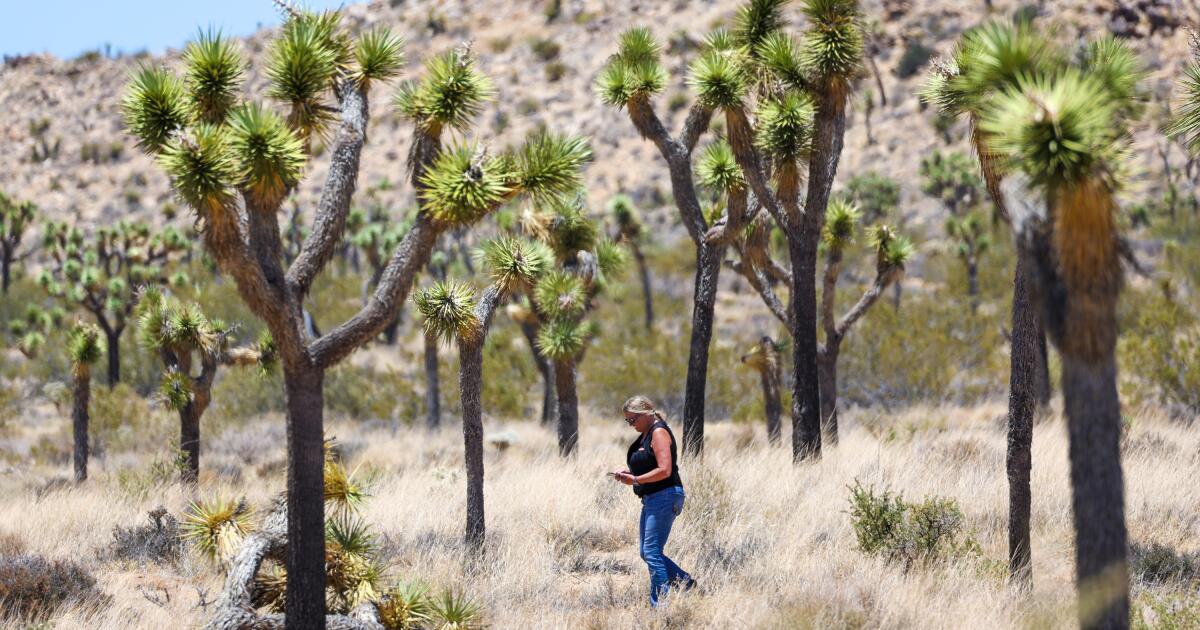
California has taken a bold step to protect the iconic Joshua tree from the threats of climate change and development.
The western Joshua tree conservation plan is a comprehensive strategy that combines scientific research with traditional ecological knowledge. It identifies areas where these trees can thrive as the climate warms. Key recommendations include limiting new development, reducing wildfire risks by controlling invasive grasses, and introducing more resilient genetic variations of Joshua trees.
This plan became necessary due to a state law enacted in 2023. Just recently, it received final approval at a Fish and Game Commission meeting. Advocates believe this effort is groundbreaking. The Joshua tree, while currently abundant, could lose significant habitat in the future.
Isabel Baer from the California Department of Fish and Wildlife commented on the importance of this proactive approach. “This is the first time I’ve seen the Legislature and governor take steps to protect a species that may be endangered down the line,” she said.
However, not everyone is on board. Some residents and local politicians are skeptical. They argue that the Joshua tree is widespread in certain communities, questioning the need for such stringent protections. The law requires property owners to get permits and pay fees if they want to remove or damage a Joshua tree. Critics, like San Bernardino County Supervisor Dawn Rowe, fear this could hinder growth and increase living costs in already affordable areas.
Rowe stated that the new law has already halted important housing projects and scared off job opportunities. A group of local agencies and residents even sent a letter to the state, calling for modifications to the conservation plan. They believe changes are needed to avoid unnecessary strain on communities during this experimental conservation effort.
There are two species of Joshua trees: eastern and western. They thrive not only in California but also in Arizona, Nevada, Utah, and Mexico. These trees hold cultural significance, having inspired a national park and art. Indigenous people have long utilized them for various purposes, including food and baskets, as noted by Robert Przeklasa, executive director of the Native American Land Conservancy.
The Joshua tree also supports a diverse ecosystem. Numerous animals, like ladder-backed woodpeckers and desert night lizards, depend on them for survival. Yet, over a third of the western species’ range in California lies on private land, where rapid development is prevalent. Experts forecast that suitable habitats could diminish significantly by the end of the century.
Brendan Cummings from the Center for Biological Diversity regards the conservation plan as a significant achievement. His organization had previously petitioned to label the western Joshua tree as threatened under the state’s Endangered Species Act. The recent law now requires permits and fees for any work that harms these trees. This has triggered concerns among local builders and homeowners.
For instance, Alec Mackie in Yucca Valley wants to build a retirement home on his property but faces daunting costs. He must pay nearly $33,000 in mitigation fees for trees he intends to remove. The complex permitting process could discourage many from pursuing construction or modification on their own land.
Baer and her team are aware of these concerns. They’ve already made adjustments, like exempting single-family homes from certain requirements. They’re also preparing an environmental impact analysis to ease the permitting process. The Fish and Game Commission will review the plan’s effectiveness regularly, aiming to ensure the Joshua tree doesn’t require additional protections in the future.
Ultimately, this conservation plan seeks to find a balance between protecting vital ecosystems and allowing local development. It’s a challenge that many communities face today, as they strive to embrace both progress and preservation.
Source link
