
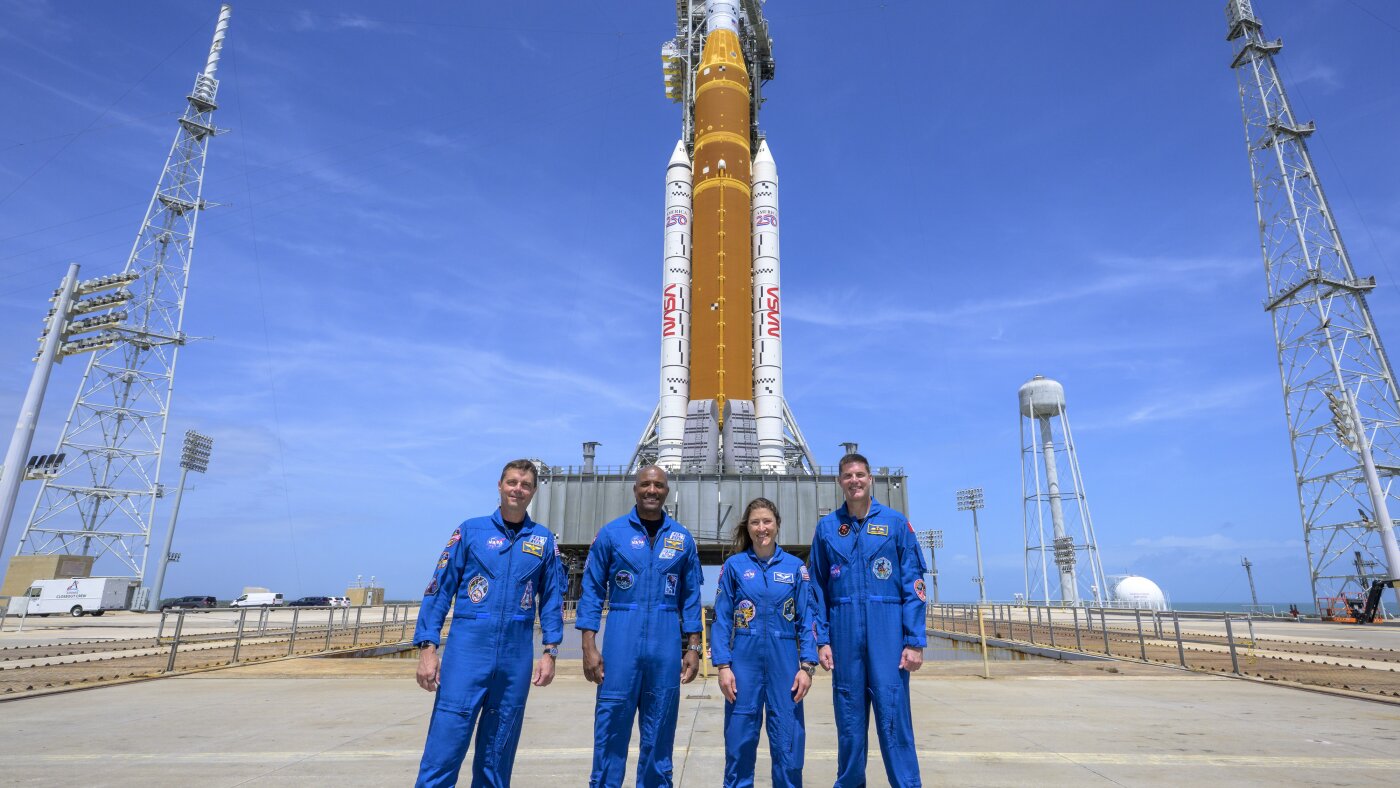
Before his last steps on the moon in December 1972, astronaut Gene Cernan etched his daughter’s initials into the lunar dust. He left humanity with a hopeful message: “We leave as we came, and God willing, as we shall return, with peace and hope for all mankind.”
Now, over fifty years later, NASA is preparing to honor Cernan’s wishes again. The Artemis II mission is set to launch on April 1, 2026, at 6:24 PM Eastern Time. Four astronauts, including three from NASA and one from the Canadian Space Agency, will board the Orion capsule atop a massive 322-foot rocket at the Kennedy Space Center in Florida.
If everything goes smoothly, they’ll orbit Earth first to test the spacecraft’s systems. After that, they’ll take a spectacular journey around the moon. This mission marks the first time in years that humans will be traveling so far from our planet.
Historically, the last crewed mission to the moon was Apollo 17. That mission unfolded in a different world—one that didn’t have the same technological advancements or global collaboration we see today. Fast forward to now, and space travel has evolved significantly. NASA aims to not only return humans to the lunar surface but also to establish a lasting human presence on the moon, with plans for bases and international partnerships.
According to recent statistics from NASA, they expect about an 80% chance of favorable weather for the launch, but they’re monitoring conditions closely. Jeff Spaulding, senior NASA test director, shared his excitement: “The final minutes before ignition is when it really hits home that we have a shot at making it today.” His words reflect not just personal sentiment but the hopes of many who have dedicated years to this mission.
Amid all this, public enthusiasm is strong. Social media is buzzing with anticipation, from countdowns to personal reflections on what this mission means for humanity. This renewed push into space is tapping into a human desire for exploration and discovery.
The Artemis II mission isn’t just a chapter in NASA’s story. It could redefine humanity’s relationship with space, fostering international cooperation and inspiring future generations. With each step into this new era, the dream of exploration grows ever closer.
For more detailed information, visit NASA’s official site NASA Artemis for updates on the mission.
