
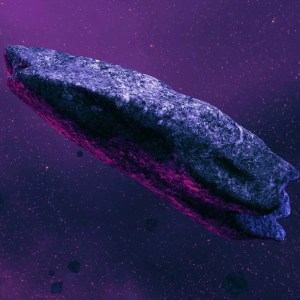
A small group of scientists believes that life on Earth might have come from space. This idea is called panspermia. They suggest that life’s building blocks could travel through cosmic dust, asteroids, or comets. Notable figures, like astronomer Carl Sagan, even speculated that intelligent civilizations might have sent these seeds to other planets.
Recently, Harvard astronomer Avi Loeb has taken this theory further. He studied an interstellar object known as 3I/ATLAS, which came unusually close to our solar system last year. Loeb proposed that this object might have been spreading life as it traveled, similar to how dandelion seeds are carried by the wind.
In a blog post, Loeb described how extrasolar life could survive the journey inside the ice of a comet. He painted a picture of these seeds being released near planets in the solar system, as if they were intentionally sown by an “interstellar gardener.” He noted the peculiar alignment between 3I/ATLAS’s path and the orbits of habitable planets around the Sun, suggesting this could be more than coincidence.
While Loeb’s ideas have sparked excitement, they have also faced scrutiny. The concept of panspermia raises many questions. For example, could life survive in extreme conditions elsewhere in the solar system? Some scientists argue that the building blocks of life were always present on Earth.
Despite the debate, this idea opens a fascinating exploration of our origins. Loeb believes we should actively study objects like 3I/ATLAS. He suggested sending probes to analyze their composition. If we find extrasolar life, we may face another thrilling question: does it resemble life on Earth?
Interestingly, social media has buzzed about these theories. Many users express both skepticism and curiosity regarding the idea of life beyond Earth.
In terms of statistics, recent surveys show that interest in space exploration is growing. According to a 2022 Pew Research survey, about 65% of Americans believe that evidence of intelligent life exists in the universe.
This discussion of panspermia not only deepens our understanding of life’s origins but also highlights humanity’s quest to uncover the mysteries of the universe. By aiming our observations at such intriguing objects, we may learn more about the possibilities of life beyond our world.
For more insights on 3I/ATLAS, check out this article: Astronomers Discover Major Clue About 3I/ATLAS’ Origins.
Source link
Avi Loeb, habitable planets, solar system planets, Carl Sagan
