
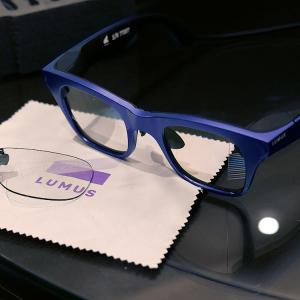
Lumus recently made headlines after its waveguides were chosen for the Meta Ray-Ban Display glasses. This marked a significant milestone for the brand. But in the fast-paced world of technology, what’s new can quickly feel outdated. At CES 2026, Lumus showcased its latest components, and they promise to enhance the optical quality of future smart glasses significantly.
The Meta Ray-Ban Display glasses impressed users with their full-color in-lens display and a 20-degree field of view. However, Lumus’s new waveguides offer exciting advancements. The latest model I tried featured the Z-30 waveguides, which provide a wider 30-degree field of view. They are not just larger; they are also 30% lighter and 40% thinner than previous models. Lumus claims these waveguides achieve over 8,000 nits per watt, which is crucial for battery efficiency in smart glasses. Users often want stylish design combined with powerful tech, and these waveguides help fulfill that need.
When I tested them, the brightness and clarity were outstanding, even at a resolution of 720 x 720. The colors were vibrant, including the challenging shade of white, which often appears washed out in other devices.
What really took me by surprise were Lumus’s 70-degree field of view waveguides. Watching videos and images through them felt immersive, covering almost the entire lens. While there was some distortion at the edges, representatives assured me that future models would address this issue. The optics were some of the sharpest and brightest I’ve encountered, making me rethink how much wider the field of view could genuinely be pushed.
Another standout feature of Lumus’s waveguides is their design. They can be bonded directly to smart glasses lenses, allowing for transitional lenses instead of clunky clip-ons. This design not only improves aesthetics but also simplifies manufacturing, resulting in waveguides as thin as 0.8mm.
Despite the challenges of capturing quality images through smart glasses, the potential is undeniable. As Lumus ramps up production with partners like Quanta and SCHOTT, we can expect a growing interest from various smart glasses manufacturers. The race for the next big thing in smart glasses is just beginning, and Lumus appears ready to lead the charge.
In a recent survey by Statista, around 39% of consumers showed interest in augmented reality smart glasses, highlighting the growing demand. This technology is on the verge of becoming a staple in our daily lives, blending convenience with style.
As the market shifts towards more sophisticated designs and technology, it will be exciting to see how companies like Lumus shape the future of smart glasses.
Source link
Lumus, smartglasses, Sam Rutherford
