
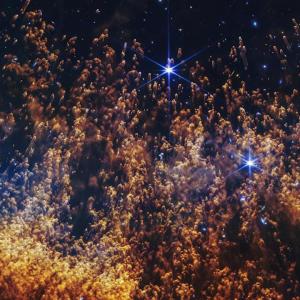
Sometimes, we all need a mental break. These days, outer space feels like a perfect getaway. Thanks to the James Webb Space Telescope (JWST), we have stunning new images of the Helix Nebula to enjoy.
The Helix Nebula, located in the constellation Aquarius, was first discovered in the early 1800s. It sits about 655 light-years from Earth, making it one of the closest planetary nebulae. Its shape has earned it nicknames like the “Eye of God” or “Eye of Sauron.” A 2004 Hubble telescope image shows this striking resemblance clearly.
What’s fascinating about the Helix Nebula is what it represents: the final stages of a dying star. As the star sheds its outer layers, those expelled gases and dust start cooling down. This debris can become the building blocks for new stars and potentially new solar systems.
The latest image from Webb’s NIRCam (Near-Infrared Camera) offers a closer look at the nebula. Details are sharper, revealing beautiful structures previously unseen.
The features we notice are known as cometary knots. These are shaped by strong winds from the dying star colliding with cooler dust and gas. According to the European Space Agency (ESA), researchers describe this interaction as sculpting the nebula.
The varying colors of these knots tell us about temperature and chemical composition. Blue hints indicate the hottest regions, heated by ultraviolet light. Yellow areas, where hydrogen forms molecules, are cooler, and reddish-orange hints show the coldest parts where gas thins and dust starts forming.
Recent statistics from NASA show that popular interest in space exploration has surged in the last decade. Social media buzz surrounding images from telescopes like Webb has attracted younger audiences eager to learn about the universe. Tweets and posts highlight not just awe but also curiosity — a sign of a shifting mindset toward cosmic exploration.
The Helix Nebula serves as a reminder of life’s cycles in the universe. Its beauty isn’t just in its appearance. It’s a glimpse of how death leads to new beginnings. This profound connection between the stars and us evokes a shared wonder for what lies beyond our planet.
For more on this stunning space photography and the science behind it, you can visit NASA’s page for further details.
Source link
James Webb Space Telescope, Helix Nebula, Vanderbilt University, Eye of Sauron
