
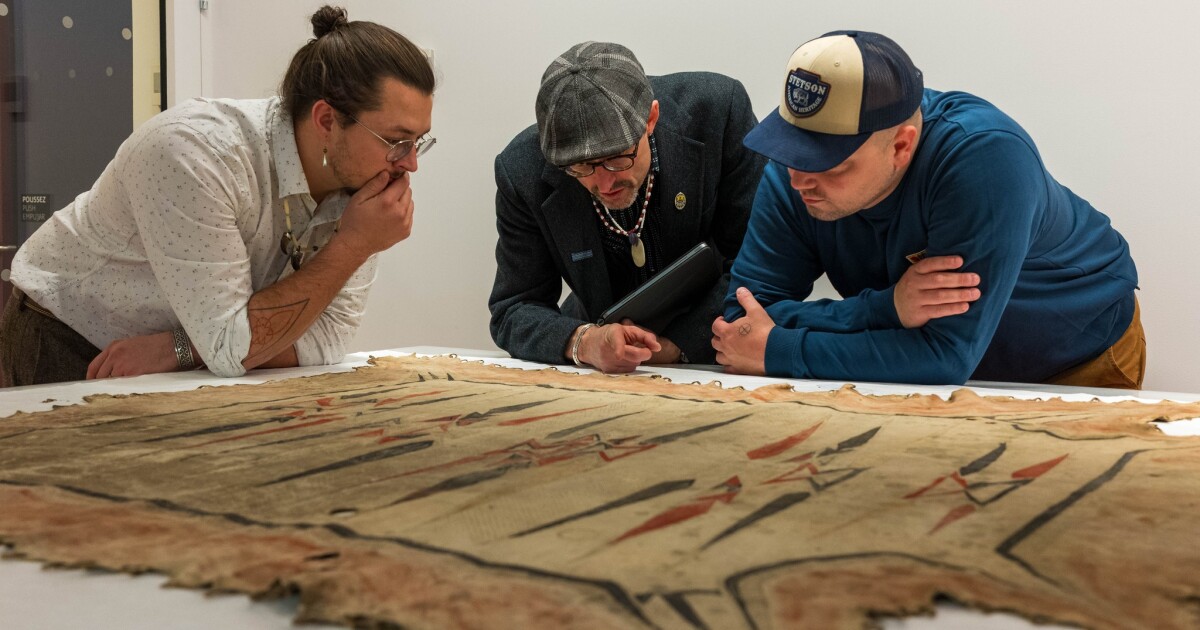
In 1725, a group of Native American leaders traveled to France to strengthen ties after the establishment of the Louisiana colony. They expressed their loyalty to King Louis XV, participated in hunts, and shared their culture through unique gifts, such as minohsayaki, or hide paintings. This significant meeting is now the focus of an exhibit at the Palace of Versailles, running until May.
The exhibit, titled “1725. Native American Allies at the Court of Louis XV,” showcases the contributions of the Miami Tribe of Oklahoma and other tribal nations. Staff from the Miami University’s Myaamia Center helped bring this exhibit to life. George Ironstack, the assistant director of the center, emphasized the historical connections between Indigenous and European nations. He noted that exploring these old relationships is essential for understanding today’s dynamics.
Ironstack highlighted the importance of storytelling through ancestral art. “The art tells our history,” he said, pointing out that these relationships still matter today. As many people are interested in reclaiming cultural traditions, Ironstack mentioned ongoing collaborations with the Peoria Tribe, focusing on the craft of animal hide painting. This project, called “Reclaiming Stories,” aims to revive traditional practices and connect younger generations with their heritage.
Their visits to Paris allowed tribal representatives to examine minohsayaki artworks firsthand. “Seeing the hides touch my heart. It’s different from viewing photos,” said Ironstack, who marveled at the skill showcased in these 300-year-old artifacts. He stressed that their art originated from their land, not from European influences.
The exhibit features a ceremonial bison hide robe gifted to the French and a rare portrait of a Myaamia individual, making its public debut in France. The Palace of Versailles believes this portrait helps illustrate the interactions between the French and Native Americans in the 18th century.
Ironstack explained that diplomacy has evolved. While early relationships focused on alliances for trade and warfare, today’s diplomacy centers around cultural revitalization and education. “These objects still foster dialogue and understanding,” he said.
There’s hope that this impactful exhibit might travel to the U.S. in the future, allowing more people to engage with this rich history. This connection between past and present reveals the ongoing importance of Indigenous cultures and their contributions to history, making it a topic worth exploring further.
Related Posts

UK Student Champions Mental Health Advocacy While Supporting Childhood Rare Disease Patients
Transforming Health and Medicine in the U.S.: A Message from Our Executive Editor
Transforming Justice: Amit Shah Unveils Game-Changing Laws for India’s Criminal Justice System
Beyond Good Vibes: How to Recognize and Overcome Toxic Positivity and Forced Optimism
Steelers Eyeing a Trade for Commanders Star WR Terry McLaurin: What It Means for the Team
Borderlands 4 Launch Accelerated by 11 Days: What This Means for the GTA 6 Release Date
Concerns Grow Among Birmingham Teachers as U.S. Education Department Faces Dismantling Plans
Congress Votes to Repeal Biden’s Emissions Cleanup Rule: What This Means for Trump and the Environment
Discover How Waffles Transformed Bluesky: A TechCrunch Insight
Unraveling Sudan’s Crisis: A Comprehensive NDTV Explainer on the World’s Most Devastating Humanitarian Disaster


Jake Retzlaff’s Tulane Debut: Key Highlights and Impressive Performance
MIT President Dismisses Trump’s Funding Priorities: What It Means for Innovation and Education
Bermuda on Alert: Hurricane Imelda Intensifies as Residents Prepare for Impact
Exciting Discovery: England Unveils the Oldest Known Ancestor of Modern Lizards!
BravoCon 2025: Discover the Visionaries Behind 30,000 Fans and 160 Stars of Reality TV’s Biggest Event!
Singapore Caterer Admits Guilt in Shocking Mass Food Poisoning Case: What You Need to Know
US Patent Office’s Unusual Move: Reexamining Nintendo’s Awarded Patent – What This Means for Gamers
Oregon Ducks Crush Oklahoma State: A Historic Defeat for Mike Gundy’s Cowboys
Exciting News: RAPT Therapeutics Secures FDA Clearance for Phase 2b Trial of RPT904 in Food Allergy Treatment – What This Means for Investors
IOS SAGAR Hits Mauritius: A Boost for Regional Maritime Connections


