
Scientists have recently uncovered an extraordinary fossil known as Tanyka amnicola, found near the Amazon rainforest in Brazil. This unique creature, often referred to as a “living fossil”, boasts a jaw structure that is quite unusual.
The name Tanyka amnicola roughly translates to “jaw living next to the river”. Its jawbone twists outward, causing some teeth to face sideways. This unique shape likely helped it grind tough foods, which hints at a diet that included fibrous plants and invertebrates.
What’s even more fascinating? Despite living over 275 million years ago, Tanyka coexisted with more advanced tetrapods. It survived the Carboniferous Rainforest Collapse—a major extinction event that wiped out many species. This resilience suggests that Tanyka was well-adapted to its environment, possibly favoring cooler temperatures and drier conditions.
The Carboniferous Rainforest Collapse
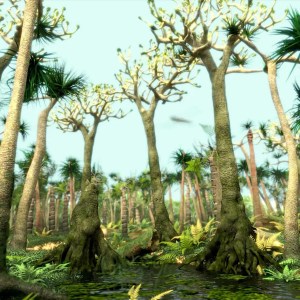
To understand why Tanyka is so significant, it’s helpful to look at the past. During the late Carboniferous period, Earth was dominated by vast rainforests and a supercontinent called Pangaea. All seemed stable until climate shifts turned these lush habitats into dry, less hospitable environments. Oxygen levels fell, making survival increasingly tough for many species.
Ecologists believe that this shift led to a decrease in amphibian species. But the discovery of Tanyka shows that not all stem tetrapods succumbed to the changing climate. Instead, some adapted and thrived, indicating a complex survival strategy during the Carboniferous Rainforest Collapse.
New Insights on Evolution
Recent studies suggest that Tanyka and its contemporaries may have evolved in unexpected ways. For example, a new study from the journal Nature highlights how ancient species adapted to survive environmental changes long before humans impacted the planet. This could mean that resilience in species like Tanyka offers lessons for biodiversity conservation today.
Experts point out that understanding ancient species like Tanyka can shine a light on current environmental challenges. Adaptability might hold the key to survival for many species, especially as habitats continue to shift due to climate change.
Conclusion
In summary, Tanyka amnicola is more than just a curious fossil. Its unusual jaw and survival story provide critical insights into ancient ecosystems and resilience amidst dramatic climate shifts. This discovery underscores the importance of studying our planet’s history to inform our future.
For more on this fascinating topic, you can explore recent findings in related studies, such as those featured in The Royal Society and other reputable sources on ancient biomes and extinction events.
Source link
Living Fossil, Carboniferous Period, Scientists, Rainforest Collapse, tetrapods
