
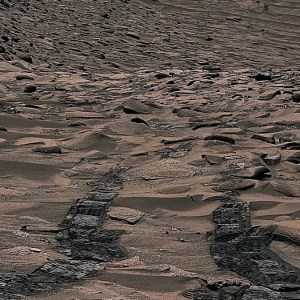
When NASA shares a timelapse video, it’s not just for fun. Recently, they released a two-minute montage using images from Curiosity, one of their rovers on Mars. This video captures six years of exploration at Gale Crater, showing Curiosity’s journey as it climbs Mount Sharp.
This video is more than a historical look; it helps scientists analyze Martian sand. The rover’s right navigation camera captures images of sand grains changing after each drive, which can reveal seasonal changes in Mars’ atmosphere.
From January 2020 to March 2021, Curiosity collected these images, but its journey began much earlier. After traveling 352 million miles, the rover touched down on Mars in August 2012. Its mission was clear: to investigate if Mars ever had the right conditions for life. Within a year, Curiosity found evidence that a lake once existed there, showing that the area had the necessary chemistry for supporting life.
Recently, Curiosity made a significant discovery. It identified 21 different organic molecules in a small rock sample—the largest number ever found on Mars. While it suggests the possibility of past life, scientists are cautious. These molecules could also form through chemical reactions between water and rock.
As the rover studies the environment, engineers monitor how dust and rocks impact its performance. Curiosity’s wheels have encountered sharp rocks that have caused damage. This prompted NASA to reinforce the wheels for its next rover, Perseverance. Engineers designed Perseverance with thicker wheels that can rotate fully, helping it navigate tricky terrain better.
To help Curiosity cope with its environment, NASA has developed strategies like driving in reverse and adjusting the speed of each wheel. These changes have allowed Curiosity to cover about 23 miles on Mars.
However, Mars poses challenges beyond wheel damage. Dust storms can obstruct solar panels, which has been a downfall for earlier rovers like Spirit and Opportunity. Those rovers ultimately lost power due to dust buildup.
Overall, Curiosity’s journey sheds light not just on Mars’ past but also on how robots can overcome harsh planetary conditions. As we continue to explore Mars, each finding becomes crucial to understanding our universe. For more details about NASA’s missions, visit NASA’s official website.
Source link
NASA, Curiosity rover, seasonal changes, Gale Crater
