
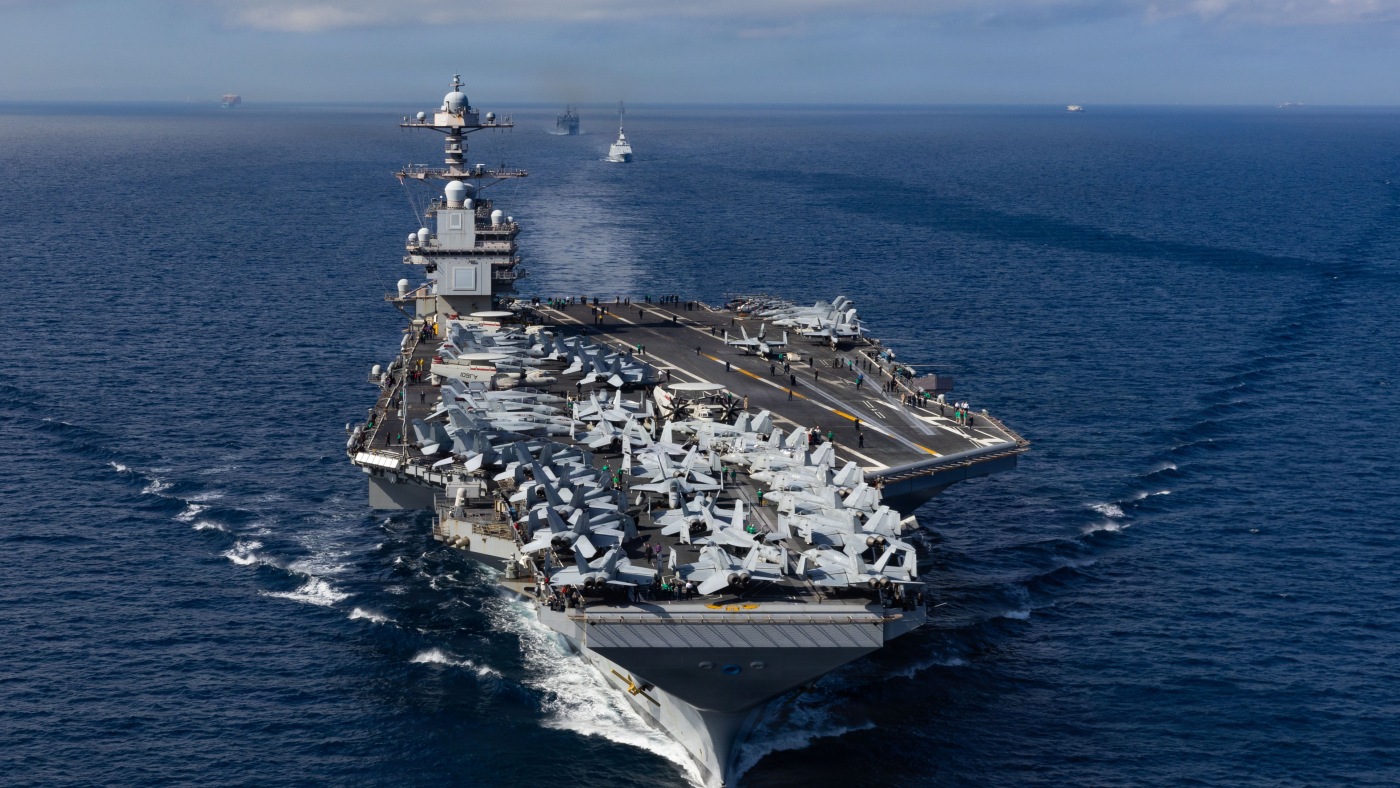
The USS Gerald R. Ford, the world’s largest aircraft carrier, has recently arrived in the Caribbean. This marks the ship’s first visit to the region, highlighting the ongoing military presence of the U.S. in international waters.
About 4,000 sailors and numerous aircraft are on board, ready for various missions. The U.S. Southern Command announced this deployment as part of Operation Southern Spear, targeting drug trafficking and other threats in the area.
This move comes amid increasing tensions with Venezuela. Nicolás Maduro, the Venezuelan leader, has been under heavy scrutiny from the U.S., with a standing reward of $50 million for information on his capture. In recent months, the U.S. military has conducted multiple operations against suspected drug smuggling in the vicinity, although some lawmakers have questioned the legality and evidence backing these strikes.
The USS Gerald R. Ford is relatively new, being commissioned back in 2017. It represents the latest advancements in naval technology, boasting features like a new electromagnetic launch system. The ship’s design aims to reduce crew size while enhancing operational efficiency compared to older carrier classes. Despite setbacks during its construction, it is expected to be more effective in supporting U.S. missions globally.
Experts have mixed opinions on the Ford’s costly build, estimated at over $13 billion. Bryan Clark, a former naval officer, noted that earlier carrier models were built at a fraction of this cost without the technological issues that plagued the Ford’s development. This raises questions about whether the extra investment has been justified given the carrier’s performance and deployment challenges.
In addition to the Ford, several other naval assets are actively present in the Caribbean. Reports suggest nearly a dozen ships and approximately 12,000 personnel are positioned in the region. This military build-up is part of the U.S.’s broader strategy to address international drug trafficking and strengthen its defense posture in response to ongoing threats.
As operations in the Caribbean continue, the presence of the Gerald R. Ford underscores the U.S. commitment to regional security and counter-narcotics efforts. The situation remains fluid, and the international community watches closely as these developments unfold.
For further insights on U.S. military strategies and developments, visit the [U.S. Southern Command](https://www.southcom.mil).
