
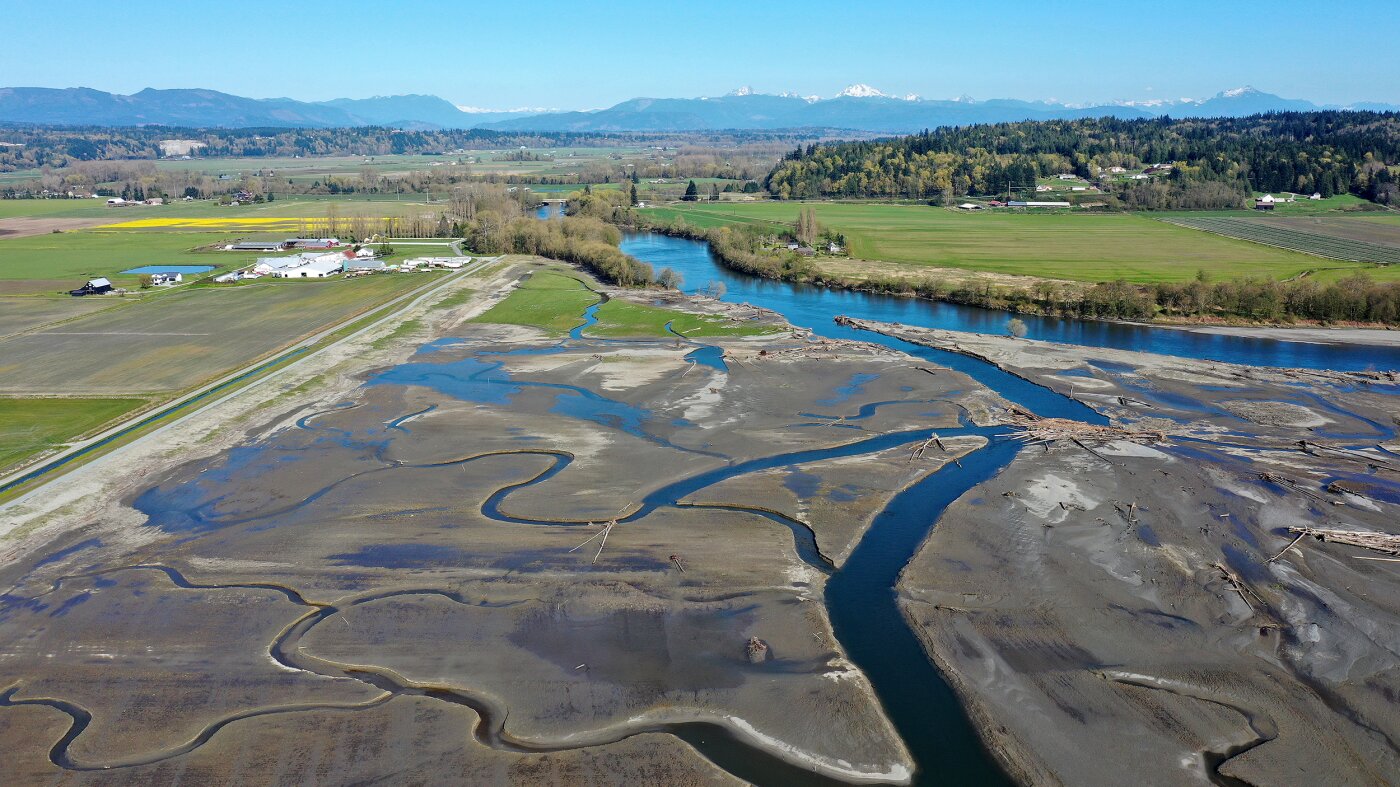
At the mouth of the Stillaguamish River near Stanwood, Washington, a major change is happening. The Stillaguamish Tribe has removed two miles of levee, allowing tidal waters to return for the first time in over a hundred years. This transformation is turning former farmland into a vibrant tidal marsh. Scott Boyd, a member of the tribe, describes it as a shift from a dairy operation to a dynamic 230-acre wetland, essential for the survival of young Chinook salmon.
This wetland is not just a new habitat; it plays a crucial role in restoring salmon populations. Boyd emphasizes the importance of tidal marshes, which serve as nurseries for young fish. The tribe purposefully invests in buying riverfront land to help revive these habitats. As a result, they are making strides to bring the Chinook salmon, currently endangered, back from the brink. In fact, according to NOAA, Chinook salmon in Puget Sound are listed as federally threatened.
Historically, the Stillaguamish Tribe struggled for recognition. They only gained federal status in 1976 after signing the Treaty of Point Elliott in 1855. Although the tribe lost much of their land, they retained fishing rights, an essential part of their culture. Boyd mentions that reclaiming the land through habitat restoration is bittersweet, as it symbolizes both loss and recovery.
Experts highlight that tidal currents help rejuvenate waters and restore fish populations. For example, the recent removal of the levee has led to a significant increase in biodiversity within the marsh. A recent study revealed that healthy wetlands can increase fish productivity by up to 400%. This kind of restoration not only supports local wildlife but also stabilizes floodplains, reducing risks for nearby communities when floods occur.
In December 2025, heavy storms exacerbated flooding across the region, causing significant damage. Governor Bob Ferguson called it the costliest natural disaster in state history, emphasizing the need for improved flood management. Researchers predict that climate change will lead to more intense weather patterns, increasing the urgency of restoration efforts.
The Stillaguamish Tribe is also taking steps to protect local families and farms. By building a new levee further from the river, they are providing more space for floodwaters, reducing potential damage. Farmer Tyler Breum notes the ongoing struggle between agricultural needs and ecological restoration. He emphasizes that while protecting salmon habitats is crucial, maintaining farmland is equally important given the growing global population.
While there’s a delicate balance to maintain, restoration projects show promise. Boyd hopes that through these efforts, future generations may once again be able to rely on the waters for fishing, just as their ancestors did. The tribe aims to expand its restoration efforts further, with a vision of creating thousands of acres of tidal habitats, essential not only for the Chinook salmon but for the entire ecosystem.
This collaborative approach between the Stillaguamish Tribe and local farmers reflects a community-driven effort to adapt and thrive amidst changing circumstances. Through dialogue and compromise, they are forging a path towards a healthier environment and sustainable future.
